The artificial intelligence landscape is evolving at breakneck speed, and one technology stands at the forefront of this revolution: Retrieval Augmented Generation (RAG). This innovative approach is transforming how AI systems access, process, and generate information, addressing some of the most significant limitations of traditional language models.
As organizations worldwide grapple with hallucinations, outdated information, and lack of transparency in AI outputs, RAG emerges as a powerful solution. This comprehensive guide explores everything you need to know about retrieval augmented generation, from its fundamental architecture to real-world applications and implementation strategies.
What is Retrieval Augmented Generation?
Retrieval Augmented Generation represents a groundbreaking paradigm in natural language processing that combines the strengths of information retrieval systems with large language models. Unlike conventional AI systems that rely solely on their training data, RAG systems dynamically fetch relevant information from external knowledge bases before generating responses.
The core innovation lies in the two-stage process: first, the system retrieves pertinent documents or data chunks from a knowledge repository, then uses this retrieved context to inform and ground the AI's response. This architecture fundamentally changes how AI systems interact with information, making them more accurate, current, and trustworthy.
Traditional language models are frozen in time, limited by their training data cutoff dates. RAG systems, however, can access up-to-date information from constantly refreshed databases, documentation repositories, or enterprise knowledge bases. This capability makes them invaluable for applications requiring current information or domain-specific knowledge.
The RAG Architecture: How It Works
Understanding the RAG pipeline is essential for anyone looking to implement this technology. The architecture consists of several interconnected components that work in harmony to deliver accurate, contextually relevant responses.
Document Ingestion and Vector Embeddings
The journey begins with document ingestion. Organizations feed their knowledge bases—whether product documentation, research papers, customer support tickets, or proprietary databases—into the RAG system. These documents undergo a transformation process where they're split into manageable chunks and converted into vector embeddings.
Vector embeddings are numerical representations that capture the semantic meaning of text. Using advanced embedding models, the system converts each text chunk into a high-dimensional vector that represents its contextual significance. These vectors enable the system to understand relationships between concepts beyond simple keyword matching.
The Vector Database Foundation
Once documents are embedded, they're stored in a specialized vector database or vector store. These databases are optimized for similarity search, allowing the system to quickly identify the most relevant information based on semantic similarity rather than exact matches. Popular vector databases include Pinecone, Weaviate, Milvus, and Chroma.
The vector database acts as the system's long-term memory, providing a scalable way to store and retrieve vast amounts of information. When a user poses a query, the system converts that query into a vector embedding using the same embedding model, then performs a similarity search to find the most relevant document chunks.
Semantic Search and Context Retrieval
The retrieval phase employs semantic search techniques to find information that's conceptually related to the query, even if it doesn't share exact keywords. This approach dramatically improves relevance compared to traditional keyword-based search methods.
The system typically retrieves multiple relevant chunks—often between 3 and 10—that provide comprehensive context for answering the query. Advanced RAG implementations may use techniques like hybrid search, combining semantic similarity with keyword matching for optimal results.
Language Model Generation with Grounding
Once relevant context is retrieved, it's combined with the user's original query and fed into a large language model (LLM). The LLM receives explicit instructions to base its response on the provided context, effectively "grounding" its output in factual information rather than relying solely on parametric knowledge.
This grounding mechanism significantly reduces hallucinations—instances where AI systems generate plausible-sounding but incorrect information. By tethering the generation process to retrieved documents, RAG systems produce more reliable and verifiable outputs.
Key Benefits of Retrieval Augmented Generation
Organizations implementing RAG systems experience numerous advantages that address critical AI deployment challenges.
Reduced Hallucinations and Improved Accuracy
The most compelling benefit is the dramatic reduction in AI hallucinations. When language models generate responses based on retrieved documents rather than purely from training data, they produce more factually accurate outputs. This improvement is crucial for enterprise applications where accuracy directly impacts business outcomes.
Access to Current and Domain-Specific Information
RAG systems overcome the knowledge cutoff limitation inherent in static language models. By retrieving information from regularly updated knowledge bases, these systems can provide current information without requiring expensive model retraining. This capability is particularly valuable for industries with rapidly evolving information landscapes.
Furthermore, RAG enables organizations to leverage domain-specific knowledge without fine-tuning massive language models. A pharmaceutical company can create a RAG system that accesses its proprietary research database, providing specialized insights without exposing sensitive information during model training.
Enhanced Transparency and Source Attribution
RAG systems can cite their sources, showing users which documents informed the generated response. This source attribution capability builds trust and allows users to verify information independently. In regulated industries or academic contexts, this traceability is essential for compliance and credibility.
Cost-Effective Customization
Compared to fine-tuning large language models, implementing RAG is significantly more cost-effective. Organizations can update their knowledge bases without retraining models, reducing computational costs and enabling rapid deployment of AI systems tailored to specific use cases.
Advanced RAG Techniques and Optimization
As the technology matures, researchers and practitioners have developed sophisticated techniques to enhance RAG system performance.
Query Transformation and Expansion
Advanced RAG implementations employ query transformation techniques to improve retrieval quality. This might involve rephrasing the user's question, breaking complex queries into sub-questions, or generating hypothetical answers that guide the retrieval process.
Query expansion adds related terms or concepts to the original query, broadening the search and ensuring relevant documents aren't missed due to vocabulary mismatches. These techniques significantly improve recall without sacrificing precision.
Reranking and Context Refinement
After initial retrieval, sophisticated RAG systems apply reranking algorithms to reorder retrieved documents based on relevance. Cross-encoder models evaluate the relationship between the query and each retrieved chunk more thoroughly than the initial retrieval phase allows.
Some implementations use context compression techniques to condense retrieved information, removing redundant or less relevant portions while preserving essential details. This optimization ensures the language model receives maximally informative context within its token limitations.
Agentic RAG and Multi-Step Reasoning
Cutting-edge RAG systems incorporate agentic workflows where the AI system can perform multiple retrieval steps, reason over intermediate results, and adaptively search for additional information as needed. This approach mirrors human research processes, leading to more comprehensive and nuanced responses.
Multi-hop reasoning enables RAG systems to connect information across multiple documents, synthesizing insights that require understanding relationships between disparate sources. This capability is essential for complex analytical tasks and research applications.
Fine-Tuning Embedding Models
Organizations can enhance retrieval quality by fine-tuning their embedding models on domain-specific data. This process teaches the model to recognize semantic relationships specific to the organization's field, improving the relevance of retrieved documents.
Implementing RAG: Practical Considerations
Successfully deploying a RAG system requires careful attention to several technical and operational factors.
Choosing the Right Components
The RAG technology stack involves multiple decisions: selecting an embedding model, choosing a vector database, picking an LLM, and determining the orchestration framework. Popular frameworks like LangChain, LlamaIndex, and Haystack provide tools to streamline RAG development.
Embedding model selection impacts both retrieval quality and computational costs. Options range from OpenAI's embedding models to open-source alternatives like sentence-transformers. The choice depends on performance requirements, budget constraints, and data privacy considerations.
Data Preparation and Chunking Strategies
The quality of your knowledge base directly impacts RAG system performance. Documents must be properly formatted, cleaned, and chunked into appropriately sized segments. Chunking strategies balance between providing sufficient context and maintaining focused, relevant information.
Overlapping chunks, where consecutive segments share some text, can improve retrieval by ensuring important information isn't split awkwardly. Metadata tagging—adding information about document source, date, author, or topic—enables more sophisticated filtering and retrieval strategies.
Evaluation and Monitoring
RAG systems require robust evaluation frameworks to ensure they meet quality standards. Metrics include retrieval accuracy (whether the system finds relevant documents), answer relevance (whether generated responses address the query), and faithfulness (whether responses accurately reflect retrieved content).
Continuous monitoring identifies degradation in system performance, whether due to knowledge base drift, changes in user query patterns, or issues with underlying components. Implementing feedback loops where users rate response quality provides valuable data for system improvement.
Real-World RAG Applications and Use Cases
Organizations across industries are deploying RAG systems to solve specific business challenges.
Enterprise Knowledge Management
Companies use RAG to create intelligent knowledge bases that employees can query conversationally. Instead of navigating complex documentation hierarchies, employees ask questions and receive accurate answers with source citations. This application dramatically reduces time spent searching for information and improves productivity.
Customer Support Automation
RAG-powered conversational AI systems provide customer support by retrieving information from product documentation, FAQs, and troubleshooting guides. These systems handle routine inquiries while escalating complex issues to human agents, improving response times and customer satisfaction.
Research and Due Diligence
Legal firms, financial analysts, and researchers use RAG systems to analyze vast document collections. The technology can quickly surface relevant precedents, financial data, or research findings, accelerating due diligence processes and enabling more comprehensive analysis.
Content Creation and Marketing
Marketing teams leverage RAG for content generation that's grounded in brand guidelines, product specifications, and market research. The technology ensures consistency across content while reducing the time required to produce high-quality marketing materials.
Healthcare and Medical Applications
Healthcare organizations implement RAG systems that access medical literature, clinical guidelines, and patient records (with appropriate privacy safeguards) to support clinical decision-making. These systems help healthcare providers stay current with rapidly evolving medical knowledge.
Challenges and Limitations of RAG Systems
Despite its advantages, RAG technology faces several challenges that practitioners must address.
Retrieval Quality Issues
The system's performance depends critically on retrieval quality. If relevant documents aren't retrieved, even the most sophisticated language model can't generate accurate responses. Retrieval failures can stem from poor embedding models, inadequate chunking strategies, or limitations in the vector database.
Context Window Limitations
Language models have finite context windows—the amount of text they can process at once. When retrieved documents exceed this limit, systems must decide which information to include, potentially omitting crucial details. While context windows are expanding, this constraint still impacts system design.
Latency and Performance Trade-offs
RAG systems involve multiple steps—embedding the query, searching the vector database, and generating a response—each adding latency. For real-time applications, optimizing this pipeline for speed while maintaining quality requires careful engineering.
Knowledge Base Maintenance
RAG systems are only as current as their underlying knowledge bases. Organizations must establish processes for regularly updating documents, removing outdated information, and ensuring data quality. Without proper maintenance, even RAG systems can provide obsolete information.
The Future of Retrieval Augmented Generation
The RAG landscape continues evolving rapidly, with several exciting developments on the horizon.
Multimodal RAG Systems
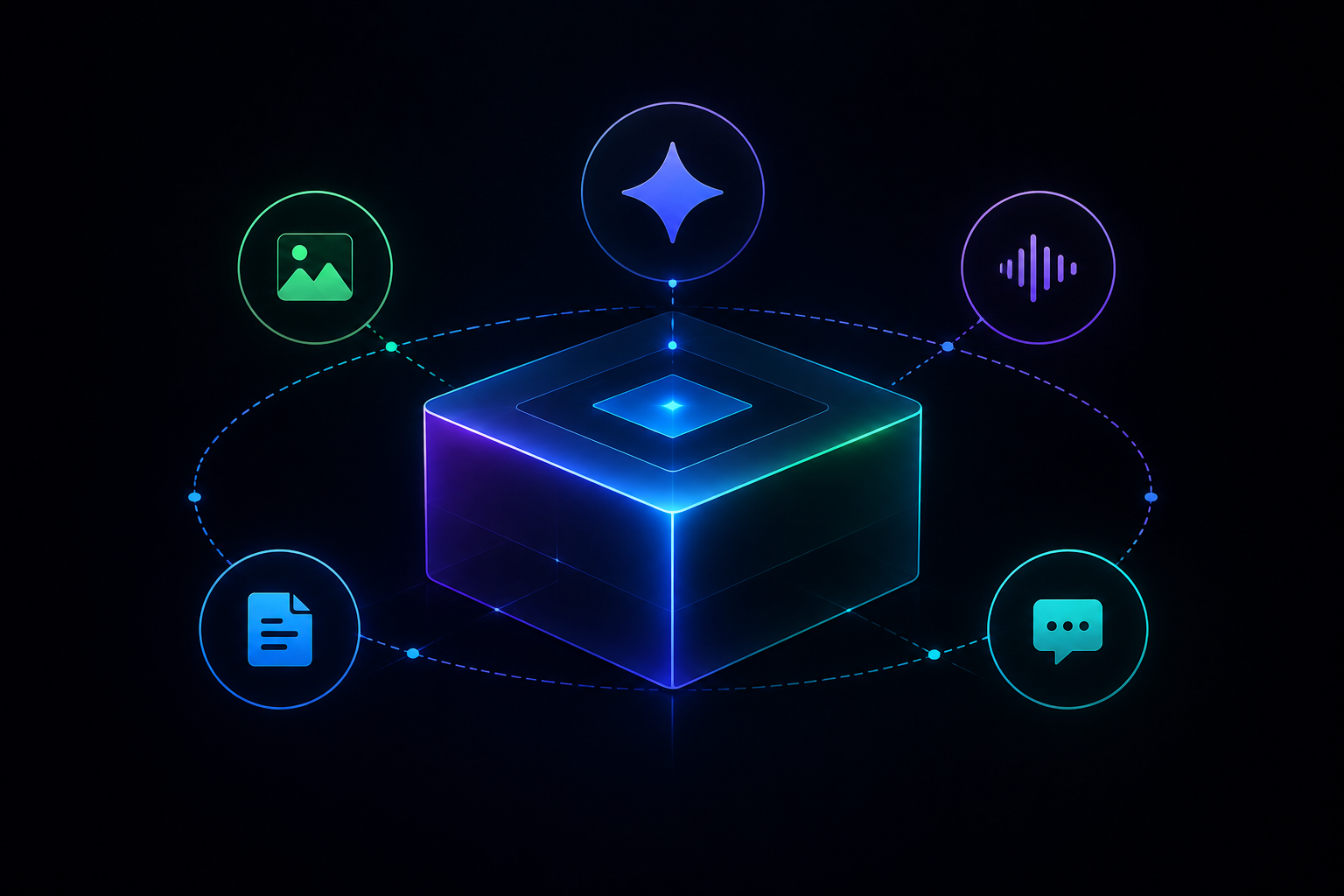
Next-generation RAG systems will handle not just text but also images, audio, and video. Multimodal retrieval enables systems to search across diverse content types, retrieving relevant information regardless of format. This capability will unlock new applications in fields like healthcare imaging and multimedia content analysis.
Integration with Knowledge Graphs
Combining RAG with knowledge graphs promises more sophisticated reasoning capabilities. Knowledge graphs represent relationships between entities explicitly, enabling RAG systems to understand complex connections and perform more nuanced reasoning over retrieved information.
Improved Personalization
Future RAG systems will incorporate user preferences, interaction history, and contextual factors to deliver increasingly personalized responses. This personalization will make AI assistants more helpful while respecting privacy and individual needs.
Conclusion
Retrieval Augmented Generation represents a paradigm shift in how we build AI systems, addressing fundamental limitations of traditional language models while opening new possibilities for practical AI applications. By combining the retrieval of relevant information with powerful language generation, RAG systems deliver accuracy, currency, and transparency that standalone models cannot match.
Organizations that embrace RAG technology gain competitive advantages through more reliable AI systems, reduced hallucinations, and the ability to leverage proprietary knowledge without expensive model training. As the technology matures and tooling improves, RAG implementation will become increasingly accessible to organizations of all sizes.
The future of AI isn't just larger language models—it's smarter architectures that know when to retrieve information and how to ground their outputs in factual sources. Retrieval Augmented Generation is leading this transformation, making AI systems more trustworthy, capable, and valuable for real-world applications.
Whether you're building customer support chatbots, research assistants, or enterprise knowledge management systems, understanding and implementing RAG technology will be essential for creating AI solutions that users can trust and rely on.
Frequently Asked Questions (FAQ)
1. What is the main difference between RAG and traditional LLMs?
Traditional large language models generate responses based solely on their training data, which becomes outdated over time. RAG systems retrieve current information from external knowledge bases before generating responses, ensuring accuracy and relevance. This approach significantly reduces hallucinations and enables access to proprietary or domain-specific information without retraining the model.
2. How does RAG reduce AI hallucinations?
RAG reduces hallucinations by grounding language model outputs in retrieved documents rather than relying purely on parametric knowledge. When the system retrieves relevant context from a knowledge base, it instructs the language model to base its response on this factual information, dramatically decreasing the likelihood of generating false or fabricated content.
3. What is a vector database and why is it important for RAG?
A vector database is a specialized storage system optimized for storing and searching vector embeddings—numerical representations of text that capture semantic meaning. Vector databases enable RAG systems to perform fast similarity searches, retrieving the most relevant documents based on conceptual similarity rather than keyword matching. This capability is essential for effective semantic search in RAG architectures.
4. Can RAG systems work with private company data?
Yes, RAG systems are particularly well-suited for private company data. Organizations can create secure knowledge bases containing proprietary information, customer data, or confidential documents. The RAG system retrieves from this private database without exposing the data during model training, making it ideal for enterprises that need AI systems with access to sensitive information.
5. What are the main components of a RAG pipeline?
The main components include: document ingestion and preprocessing, an embedding model to convert text into vectors, a vector database to store embeddings, a retrieval system to find relevant documents, and a large language model to generate responses based on retrieved context. Orchestration frameworks like LangChain or LlamaIndex typically coordinate these components.
6. How do you measure RAG system performance?
RAG system performance is measured using several metrics: retrieval accuracy (whether relevant documents are found), precision and recall of retrieval, answer relevance (how well responses address the query), faithfulness (whether responses accurately reflect retrieved content), and end-to-end quality scores. Human evaluation and user feedback are also critical for assessing real-world performance.
7. What is the difference between RAG and fine-tuning?
Fine-tuning modifies a language model's parameters by training it on specific data, embedding knowledge directly into the model. RAG leaves the model unchanged and instead retrieves external information at query time. RAG is more flexible, cost-effective, and allows easy knowledge updates, while fine-tuning may provide better performance for specific tasks but requires expensive retraining when information changes.
8. Can RAG systems cite their sources?
Yes, one of RAG's key advantages is source attribution. The system knows which documents informed its response and can provide citations, links, or excerpts from source materials. This transparency builds user trust and enables verification of information, making RAG systems particularly valuable in academic, legal, and regulated contexts.
9. What industries benefit most from RAG technology?
Industries with large knowledge bases, rapidly changing information, or strict accuracy requirements benefit most: healthcare (medical literature and clinical guidelines), legal (case law and regulations), financial services (market research and compliance documents), customer support (product documentation), research institutions (academic papers), and enterprise organizations (internal knowledge management).
10. How does semantic search differ from keyword search in RAG?
Keyword search matches exact terms between queries and documents, missing conceptually related content with different wording. Semantic search uses vector embeddings to understand meaning, retrieving documents that are conceptually similar even without shared keywords. This approach dramatically improves retrieval quality, finding relevant information that keyword-based systems would miss.
11. What are embedding models and how do they work in RAG?
Embedding models are neural networks that convert text into numerical vectors (embeddings) that represent semantic meaning. In RAG systems, the same embedding model processes both knowledge base documents and user queries, ensuring they exist in the same vector space. The system then measures similarity between query and document vectors to retrieve relevant information.
12. Is RAG suitable for real-time applications?
RAG can support real-time applications with proper optimization. While the multi-step process adds latency compared to simple LLM queries, techniques like caching frequently accessed embeddings, optimizing vector database performance, and using efficient retrieval algorithms can reduce response times to acceptable levels for most interactive applications.
13. How do you update information in a RAG system?
Updating RAG systems is straightforward: add new documents to the knowledge base, process them through the embedding pipeline, and store the resulting vectors in the database. Old or outdated documents can be removed. This process doesn't require retraining the language model, making RAG systems much easier to maintain than fine-tuned models.
14. What are the costs associated with implementing RAG?
RAG implementation costs include: embedding model computation (either API costs or hosting infrastructure), vector database storage and query costs, language model API fees or hosting expenses, and development/maintenance resources. However, RAG is generally more cost-effective than fine-tuning large models, especially when knowledge needs frequent updates.
15. Can RAG work with multiple languages?
Yes, multilingual RAG systems use embedding models trained on multiple languages, enabling retrieval and generation across language boundaries. Some systems can retrieve documents in one language and generate responses in another, making RAG valuable for global organizations with multilingual knowledge bases.