logoChat Smith
Comparison

GPT-4o vs GPT-4.1: What Actually Changed?

A detailed comparison of GPT-4o and GPT-4.1 : covering context window, coding performance, instruction following, pricing, use cases.
GPT-4o vs GPT-4.1: What Actually Changed?
A
Aiden Smith
Mar 25, 2026 ・ 11 mins read

OpenAI's model releases have been moving fast, and the naming conventions have not made things easier. GPT-4o and GPT-4.1 sound like incremental cousins, but they are built around meaningfully different priorities — and choosing the wrong one for your workflow has real consequences for cost, quality, and speed. This guide breaks down exactly how GPT-4o and GPT-4.1 differ across every dimension that matters, backed by benchmark data and real-world observations, so you can make a confident choice. And if you want to run both models side by side on your actual tasks and compare their outputs in real time, Chat Smith is the fastest way to do it.

GPT-4o vs GPT-4.1: Quick Overview

GPT-4o was released in May 2024 as OpenAI's flagship multimodal model — designed to handle text, images, and audio within a single unified architecture. Its defining characteristic was its versatility: fast, capable across modalities, and accessible to a broad audience through ChatGPT and the API alike. GPT-4.1 was released on April 14, 2025, and represents a fundamentally different set of priorities. Where GPT-4o was built for breadth, GPT-4.1 was built for depth — with a particular focus on coding, instruction following, and long-context reasoning. It launched as an API-only model, positioned explicitly for developers and production engineering workflows rather than general consumer use.


Context Window: 128K vs 1 Million Tokens

The most immediate structural difference between the two models is the context window. GPT-4o supports 128,000 tokens of input — already a substantial window that covers hundreds of pages of text. GPT-4.1 expands this to 1,000,000 tokens, an eightfold increase that fundamentally changes what is possible in a single session. At one million tokens, GPT-4.1 can ingest entire codebases, full legal contracts, lengthy research corpora, or long video transcripts in a single prompt without losing information or requiring chunking. OpenAI developed new benchmarks specifically to measure real-world long-context performance — and GPT-4.1 maintains consistently high recall and cross-referencing accuracy even at the upper end of its context window. For any task where context length is a practical bottleneck, this is one of the most significant capability improvements in the GPT-4 generation.

Coding Performance: GPT-4.1 Leads Decisively

Coding is where the performance gap between GPT-4o and GPT-4.1 is most pronounced. On SWE-bench Verified — the standard benchmark for real-world software engineering tasks, where a model is given a code repository and an issue description and must generate a working patch — GPT-4.1 completes 54.6% of tasks. GPT-4o completes 33.2%. That is an absolute improvement of 21.4 percentage points, or roughly a 65% relative improvement in practical coding ability. This is not a marginal gain. It moves GPT-4.1 from the category of 'code helper' — able to write functions and explain concepts — into the category of agentic problem solver: a model that can explore a repository end-to-end, understand dependencies across files, and produce patches that actually compile and pass tests on the first attempt. GPT-4.1 also reduces extraneous code edits dramatically — from approximately 9% of outputs for GPT-4o down to 2%, which means cleaner diffs, fewer review cycles, and less noise in automated pipelines.

Instruction Following: More Literal, More Reliable

GPT-4.1 is significantly better at following complex, multi-step instructions precisely. On Scale's MultiChallenge benchmark — a measure of instruction-following accuracy — GPT-4.1 scores 38.3%, a 10.5 percentage point increase over GPT-4o. In practice this means GPT-4.1 interprets prompts more literally and executes them more exactly. Where GPT-4o might reinterpret a slightly ambiguous instruction and produce something adjacent to what you asked for, GPT-4.1 will follow the stated instruction to the letter. This is a significant advantage for production workflows, API integrations, and any context where consistency and predictability matter more than creative interpretation. The practical implication for users is that GPT-4.1 rewards precise, explicit prompts. If you are used to the more forgiving, interpretive style of GPT-4o, you may need to be slightly more specific with your instructions — but the payoff is output that matches your specification far more reliably.

Benchmark Summary: GPT-4o vs GPT-4.1

SWE-bench Verified (real-world coding): GPT-4.1 scores 54.6% vs GPT-4o's 33.2% — a 21.4-point improvement. MultiChallenge (instruction following): GPT-4.1 scores 38.3% vs GPT-4o at approximately 27.8% — a 10.5-point improvement. MMLU (academic reasoning): GPT-4.1 scores 90.2% vs GPT-4o's 88.7% — a 1.5-point improvement. Video-MME long context (no subtitles): GPT-4.1 scores 72.0% vs GPT-4o's 65.3% — a 6.7-point improvement. Context window: GPT-4.1 supports 1,000,000 tokens vs GPT-4o's 128,000 — an 8x increase. Knowledge cutoff: GPT-4.1 June 2024 vs GPT-4o October 2023.

Pricing: GPT-4.1 Is Significantly Cheaper

One of the more surprising aspects of GPT-4.1's release is its pricing. Despite being the more capable model on most benchmarks, GPT-4.1 is considerably cheaper to use via the API than GPT-4o. GPT-4.1 costs $2.00 per million input tokens and $8.00 per million output tokens. GPT-4o costs $2.50 per million input tokens and $10.00 per million output tokens. At scale, GPT-4.1 is approximately 1.3 times cheaper than GPT-4o for equivalent usage, and it also offers a 75% discount on cached inputs — which makes repeated or similar queries significantly more economical in production systems. GPT-4.1 mini goes further still: it matches or exceeds GPT-4o performance on many benchmarks while cutting API costs by 83% and reducing latency by nearly half. For developers running high-volume pipelines, switching from GPT-4o to GPT-4.1 or GPT-4.1 mini is one of the most straightforward cost optimisations available in 2025.

Speed and Latency

GPT-4o was designed with real-time interaction speed as a core priority — it optimises for a fast time to first token, often responding in under half a second. This makes it well-suited for conversational interfaces, voice applications, and live chat contexts where delay is immediately perceptible. GPT-4.1 optimises differently: it prioritises sustained throughput and large-context efficiency rather than raw initial speed. For long or complex inputs, GPT-4.1 may take slightly longer to begin responding but processes massive inputs more efficiently end-to-end and completes complex tasks with fewer corrections. The net effect is that GPT-4o feels faster in interactive, turn-by-turn conversation, while GPT-4.1 is more efficient for batch work, long document processing, and multi-step agentic tasks where total completion quality matters more than the instant feel of the first token.

Multimodal Capabilities: GPT-4o Still Leads

GPT-4o's original defining capability was its native multimodal architecture — the ability to process and generate text, images, and audio in a unified model, including real-time voice interaction with an average response time of around 320 milliseconds. GPT-4.1 includes improvements in image and video understanding — it performs as well as or better than GPT-4o on multimodal benchmarks like MMMU, MathVista, and CharXiv, and sets a new state-of-the-art result on Video-MME long-context video analysis. However, GPT-4.1 does not match GPT-4o's native real-time audio capabilities. For applications where natural, low-latency voice interaction is central — customer service agents, real-time translation tools, voice assistants — GPT-4o remains the more appropriate choice.

Availability: Who Can Access Each Model?

GPT-4o is available through ChatGPT for both free and paid users, as well as through the OpenAI API. It is the most broadly accessible of OpenAI's frontier models and the default choice for most general ChatGPT users. GPT-4.1 launched in April 2025 as an API-only model, designed explicitly for developers. It subsequently became available in ChatGPT for paid subscribers, with GPT-4.1 mini becoming the default model for free users. For teams and individuals using AI primarily through ChatGPT's consumer interface, GPT-4o remains the most familiar and accessible option. For developers building on the OpenAI API, GPT-4.1 is the current recommended model for coding, instruction-following-heavy workflows, and anything requiring a large context window.

GPT-4.1 Model Family: Flagship, Mini, and Nano

GPT-4.1 launched not as a single model but as a three-tier family. GPT-4.1 (flagship) is the full model, designed for maximum coding and instruction-following performance. GPT-4.1 mini is a compact model that matches or exceeds GPT-4o on many benchmarks while cutting latency by nearly half and API costs by 83%. GPT-4.1 nano is the smallest and fastest variant, optimised for tasks requiring extremely low latency — classification, autocompletion, and real-time filtering — while still carrying the 1-million-token context window. All three variants support the full 1-million-token context window, share the refreshed June 2024 knowledge cutoff, and outperform their GPT-4o equivalents across most benchmarks. For most developers, GPT-4.1 mini represents the most practical starting point: near-flagship capability at a fraction of the cost.

Which Model Should You Use?

Use GPT-4.1 if:

Your work is code-heavy — whether writing new functions, debugging, reviewing pull requests, or running agentic engineering pipelines, GPT-4.1's 21-point SWE-bench advantage translates directly into better and more reliable output. You need to process long documents, large codebases, or multi-file contexts in a single session — the 1-million-token window removes chunking and context management overhead that GPT-4o requires. Your application depends on strict instruction following — if precise, literal execution of detailed prompts is important to your workflow, GPT-4.1's architecture is better suited. You are cost-sensitive on API usage — GPT-4.1 is cheaper than GPT-4o despite being more capable, making it the obvious default for production systems.

Use GPT-4o if:

Real-time voice interaction is central to your product — GPT-4o's native audio architecture and sub-500ms response time make it the right choice for voice agents, live translation, and conversational interfaces where latency is perceptible. You need the most broadly accessible model with maximum ecosystem compatibility — GPT-4o is available across ChatGPT free and paid tiers and has the widest third-party integration support. Your tasks are primarily conversational and interactive rather than technical — for general Q&A, content drafting, brainstorming, and casual AI assistance, GPT-4o's speed and conversational calibration still shine.

Run GPT-4o and GPT-4.1 Side by Side on

GPT 4.o vs GPT 4.1

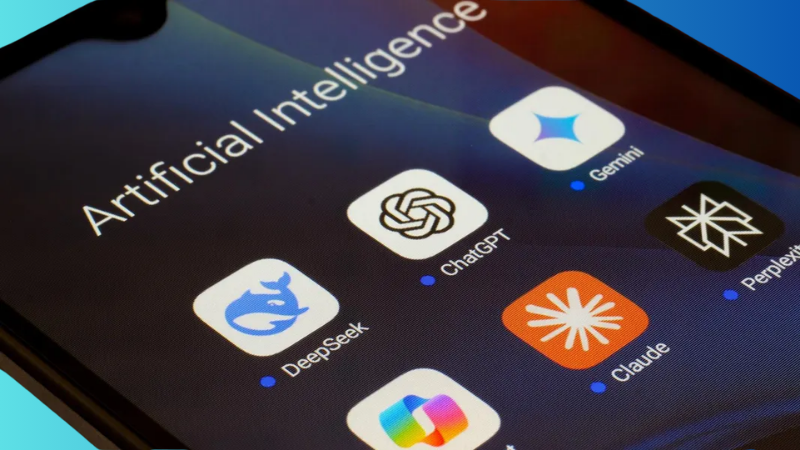
The best way to understand the real-world difference between GPT-4o and GPT-4.1 is not to read about it — it is to run your actual tasks through both models and compare the outputs directly. Chat Smith is a multi-model AI platform that gives you access to GPT-4o, GPT-4.1, Claude, Gemini, Grok, and Deepseek through a single interface. You can run the same prompt through GPT-4o and GPT-4.1 simultaneously, see their responses side by side, and decide in real time which output better serves your task — without switching platforms, managing separate API keys, or re-entering context.

Frequently Asked Questions

1. Is GPT-4.1 better than GPT-4o?

On most technical benchmarks, yes — GPT-4.1 outperforms GPT-4o in coding, instruction following, long-context reasoning, and overall reasoning depth. GPT-4o retains advantages in real-time voice interaction and conversational speed. For most developer and professional use cases, GPT-4.1 is the stronger model.

2. Is GPT-4.1 available in ChatGPT?

GPT-4.1 launched as an API-only model in April 2025 and subsequently became available in ChatGPT for paid subscribers. GPT-4.1 mini became the default model for ChatGPT free users. The flagship GPT-4.1 model is primarily intended for developers and API-based workflows.

3. How much does GPT-4.1 cost compared to GPT-4o?

GPT-4.1 costs $2.00 per million input tokens and $8.00 per million output tokens via the API. GPT-4o costs $2.50 per million input tokens and $10.00 per million output tokens. GPT-4.1 is approximately 1.3 times cheaper than GPT-4o, with an additional 75% discount available for cached inputs.

4. What is the context window of GPT-4.1?

GPT-4.1 supports up to 1,000,000 input tokens — eight times larger than GPT-4o's 128,000-token limit. All three variants in the GPT-4.1 family (flagship, mini, and nano) share this 1-million-token context window.

5. What replaced GPT-4.5?

OpenAI deprecated GPT-4.5 Preview on July 14, 2025, with GPT-4.1 serving as its replacement. GPT-4.1 offers improved or comparable performance on most key capabilities while delivering significantly lower cost and latency than GPT-4.5 Preview.

6. Which is better for coding — GPT-4o or GPT-4.1?

GPT-4.1 is significantly better for coding. It scores 54.6% on SWE-bench Verified versus 33.2% for GPT-4o — a gap wide enough to represent a qualitative difference in what the model can accomplish on real engineering tasks. For anything beyond simple function generation or isolated snippets, GPT-4.1 is the clear choice. You can compare both models on your own code directly via Chat Smith.

footer-cta-image

Related Articles