logoChat Smith
Technology

What are AI agents?

What exactly is an AI agent, and why are organizations across industries racing to implement these intelligent systems?
What are AI agents?
10 mins read
Published on Nov 17, 2025

The landscape of artificial intelligence is rapidly evolving, and at the forefront of this transformation are AI agents - sophisticated systems that are reshaping how businesses operate and how we interact with technology. But what exactly is an AI agent, and why are organizations across industries racing to implement these intelligent systems?

What are AI agents?

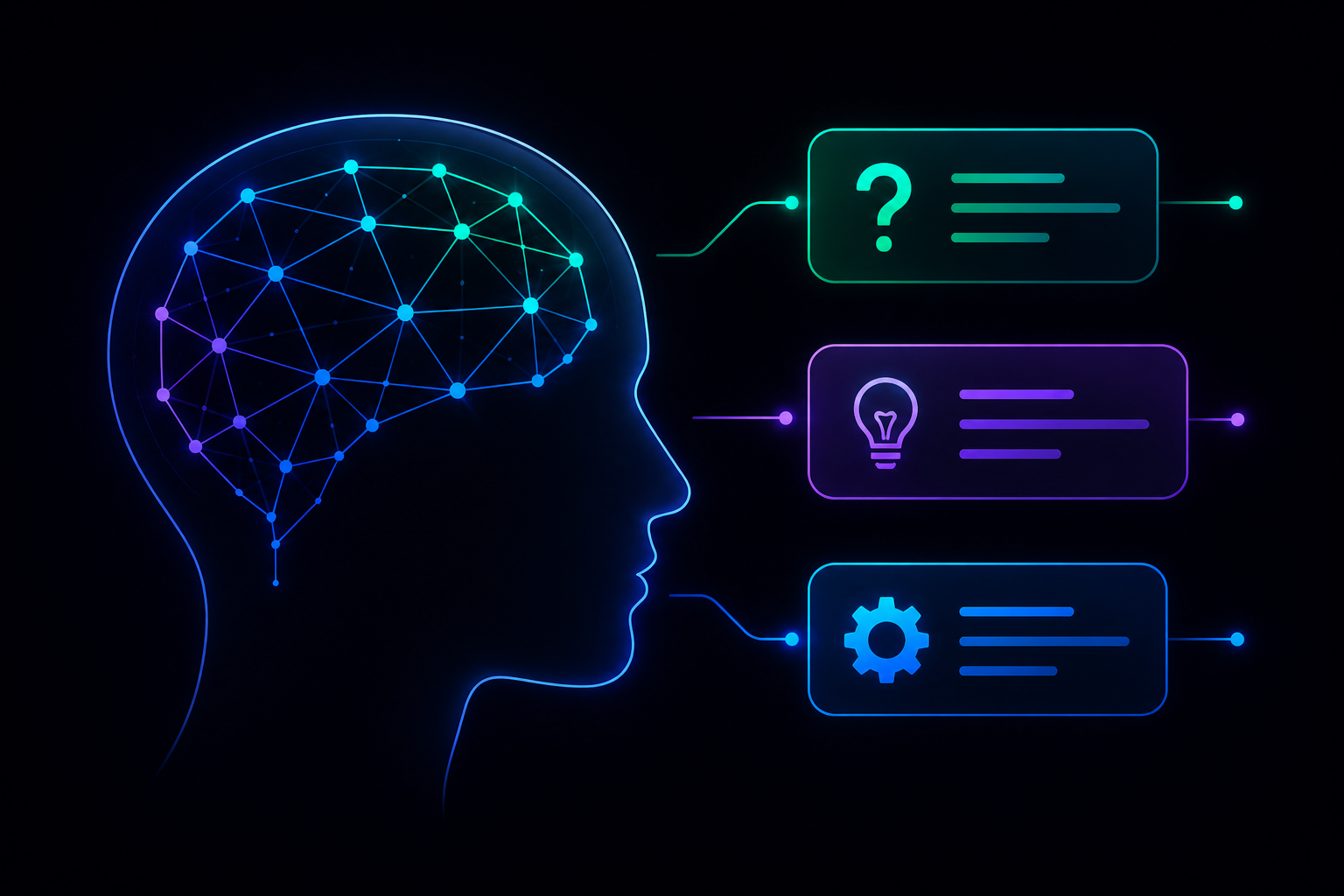
An AI agent is an autonomous software program that perceives its environment, makes decisions, and takes actions to achieve specific goals without constant human intervention. Unlike traditional software that follows rigid, pre-programmed instructions, AI agents leverage machine learning, natural language processing, and decision-making algorithms to adapt, learn, and respond to changing conditions in real-time.

Think of an AI agent as a digital employee that never sleeps. It continuously monitors data streams, analyzes patterns, interprets context, and executes tasks with minimal supervision. From customer service chatbots that resolve inquiries to complex systems managing supply chains, AI agents are becoming the backbone of modern digital infrastructure.

The core components of AI agents

Every effective AI agent comprises several fundamental elements that enable its autonomous functionality:

  • Perception mechanisms allow the agent to gather information from its environment through various data sources, sensors, or user inputs. This could include text, images, audio, or structured data from databases and APIs.
  • Reasoning and decision-making engines form the cognitive core of AI agents. These systems process perceived information, evaluate multiple options, and select optimal actions based on predefined objectives and learned patterns. Advanced agents employ reinforcement learning and neural networks to improve their decision-making over time.
  • Action execution capabilities enable agents to carry out decisions by interacting with software systems, databases, or external platforms. This might involve sending emails, updating records, triggering workflows, or controlling physical devices through Internet of Things (IoT) connections.
  • Learning mechanisms distinguish true AI agents from simple automation. Through supervised learning, unsupervised learning, or reinforcement learning, agents continuously refine their performance by analyzing outcomes and adjusting their strategies.

Types of AI agents

The AI agent ecosystem encompasses various types, each designed for specific use cases and complexity levels:

1. Simple reflex agents

These basic agents operate on straightforward condition-action rules. When specific conditions are detected, they trigger predetermined responses. Rule-based chatbots that respond to keyword matches represent this category. While limited in adaptability, they excel at handling repetitive, well-defined tasks efficiently.

2. Model-based reflex agents

Moving up the sophistication ladder, these agents maintain an internal model of their environment. This allows them to handle partial information and make informed decisions even when complete data isn't available. Intelligent virtual assistants often employ this architecture to maintain conversation context.

3. Goal-based agents

These agents work toward specific objectives by evaluating different action sequences and selecting those most likely to achieve desired outcomes. AI-powered scheduling systems and route optimization agents exemplify this category, constantly evaluating multiple paths to reach defined goals.

4. Utility-based agents

The most sophisticated category, utility-based agents, don't just achieve goals—they optimize for the best possible outcome by weighing multiple factors. They assign utility values to different states and actions, making nuanced decisions that balance competing priorities. Autonomous trading systems and personalized recommendation engines operate on this principle.

5. Learning agents

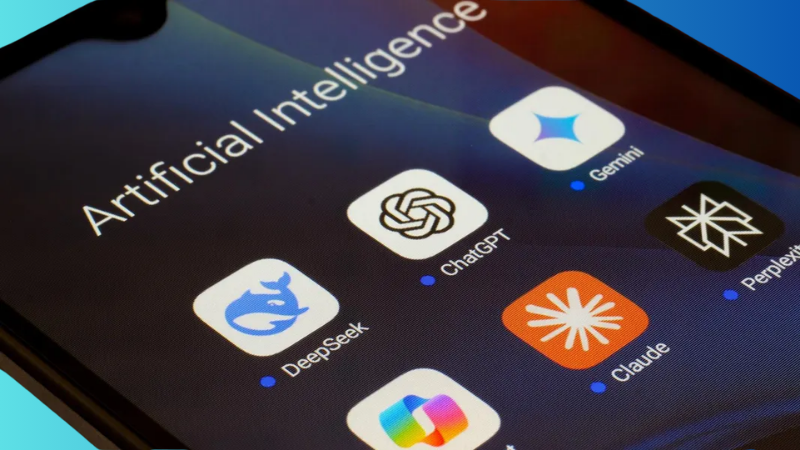
At the cutting edge, learning agents continuously improve through experience. They incorporate feedback loops, analyze performance metrics, and adapt their strategies without explicit reprogramming. Conversational AI platforms like Chat Smith leverage multiple large language models (ChatGPT, Gemini, Deepseek, Grok) to provide increasingly accurate and contextually relevant responses over time.

How AI agents work

Understanding the operational framework of AI agents reveals why they're so transformative:

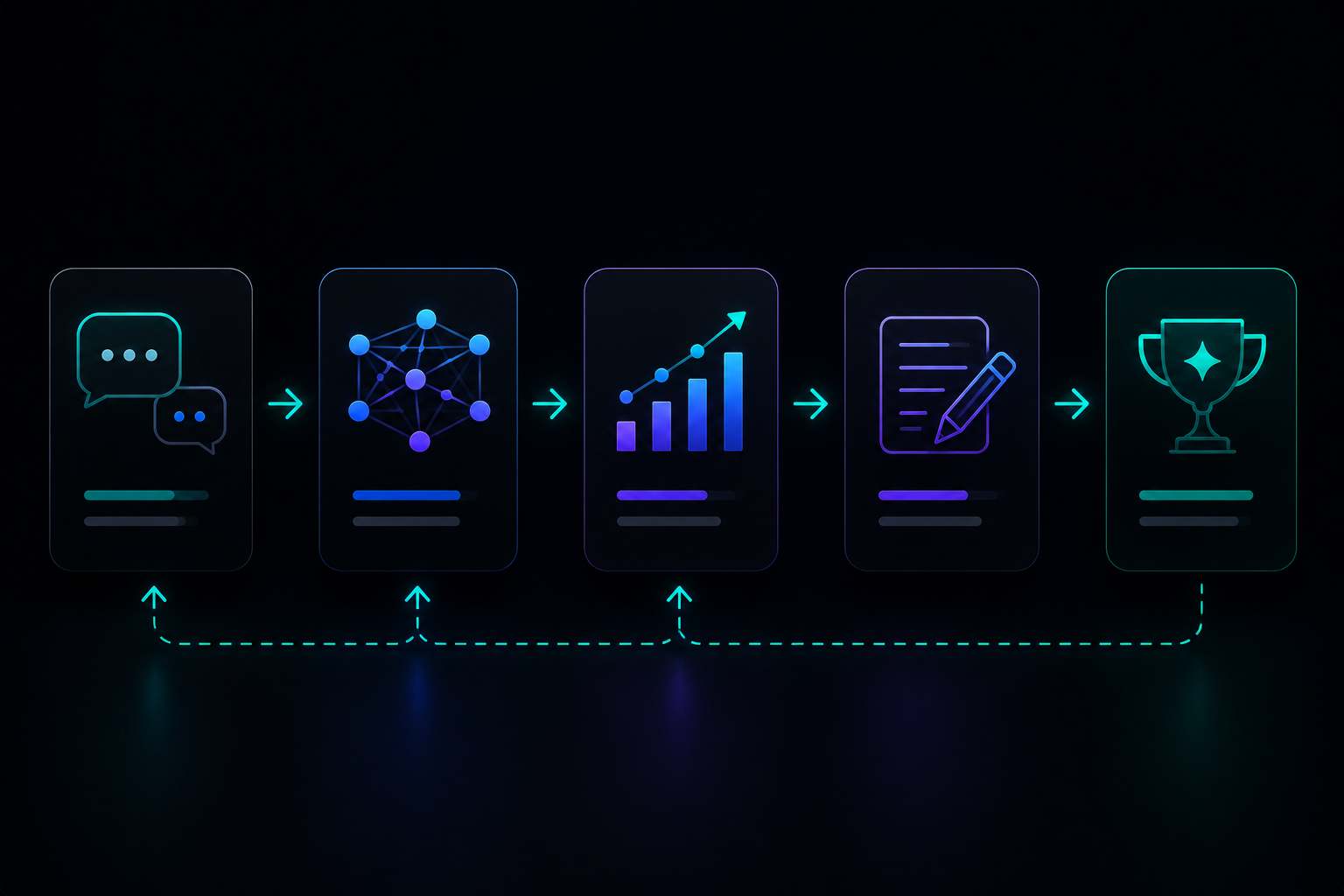
The process begins with environmental observation. AI agents constantly monitor designated data sources—whether customer inquiries, sensor readings, market fluctuations, or system logs. Advanced agents employ computer vision, speech recognition, or text analysis to interpret diverse data formats.

Next comes information processing through sophisticated algorithms. The agent applies natural language understanding, pattern recognition, and predictive analytics to extract meaning from raw data. This stage often involves querying knowledge bases, referencing historical data, and applying learned patterns.

The decision-making phase represents the agent's intelligence core. Using techniques like decision trees, neural networks, or Bayesian inference, the agent evaluates possible actions against its objectives. Advanced systems consider multiple factors simultaneously, including potential consequences, resource constraints, and probabilistic outcomes.

Finally, action execution closes the loop. The agent implements its chosen strategy by interfacing with relevant systems—sending communications, updating databases, triggering automated workflows, or escalating to human operators when necessary.

Throughout this cycle, feedback mechanisms enable continuous improvement. The agent monitors action outcomes, compares results against expectations, and adjusts its models accordingly, embodying the principle of continuous learning.

Real-world applications: AI agents transforming industries

The practical applications of AI agents span virtually every sector:

1. Customer service and support

Conversational AI agents have revolutionized customer engagement. Modern platforms like Chat Smith integrate multiple AI models - including ChatGPT for nuanced understanding, Gemini for multimodal interactions, Deepseek for specialized queries, and Grok for real-time information - creating comprehensive support experiences. These agents handle thousands of simultaneous conversations, resolve common issues instantly, and seamlessly escalate complex cases to human agents while maintaining complete conversation context.

2. Business process automation

Robotic process automation (RPA) enhanced with AI capabilities creates agents that navigate enterprise systems, extract data, process transactions, and generate reports autonomously. Unlike traditional RPA, AI-powered agents adapt to interface changes, handle exceptions intelligently, and learn optimal workflows through observation.

3. Personal digital assistants

Virtual assistants like Siri, Alexa, and Google Assistant represent consumer-facing AI agents that manage schedules, control smart home devices, answer questions, and orchestrate multi-step tasks through voice commands. These agents increasingly employ contextual awareness to provide proactive suggestions.

4. Healthcare and diagnostics

In medical contexts, AI agents analyze patient data, identify potential diagnoses, recommend treatment protocols, and monitor recovery progress. Clinical decision support systems augment physician expertise by processing vast medical literature and identifying relevant insights for specific cases.

5. Financial services and trading

Algorithmic trading agents execute trades based on market conditions, news sentiment, and predictive models. Fraud detection agents monitor transaction patterns in real-time, flagging suspicious activities with greater accuracy than rule-based systems. Robo-advisors provide personalized investment guidance by analyzing financial goals, risk tolerance, and market conditions.

6. Manufacturing and supply chain

Predictive maintenance agents analyze sensor data from industrial equipment, anticipating failures before they occur and scheduling interventions to minimize downtime. Supply chain optimization agents dynamically adjust logistics, inventory levels, and supplier relationships based on demand forecasts and disruption risks.

What powers AI agents

Modern AI agents rely on a sophisticated technology ecosystem:

  • Large language models (LLMs) like GPT-5, Gemini, Claude, and others provide the natural language understanding and generation capabilities that enable human-like interactions. Platforms such as Chat Smith leverage multiple LLMs simultaneously, selecting the optimal model for each specific query to maximize response quality.
  • Machine learning frameworks including TensorFlow, PyTorch, and scikit-learn provide the mathematical foundations for agent learning and decision-making. These libraries enable developers to implement deep learning, reinforcement learning, and transfer learning algorithms.
  • Knowledge graphs and vector databases give agents structured access to vast information repositories. Systems like RAG (Retrieval-Augmented Generation) enable agents to ground their responses in specific knowledge bases, reducing hallucinations and improving accuracy.
  • API integrations extend agent capabilities by connecting them to external services. Modern agents orchestrate complex workflows by calling multiple APIs, processing responses, and chaining actions across disparate systems.
  • Cloud infrastructure provides the computational power and scalability required for enterprise AI agents. Platforms like AWS, Azure, and Google Cloud offer specialized AI services, including pre-trained models, managed inference, and distributed training capabilities.

Why organizations adopt AI agents

The business case for AI agents rests on several compelling advantages:

  • Operational efficiency improves dramatically as agents handle high-volume, repetitive tasks faster and more accurately than human workers. Organizations report productivity gains of 30-70% in automated workflows.
  • 24/7 availability ensures continuous operations without shift management, fatigue, or downtime. AI-powered customer support through platforms like Chat Smith means customers receive instant assistance regardless of time zone or holiday schedules.
  • Scalability becomes nearly infinite. Digital agents handle demand spikes effortlessly—whether processing thousands of customer inquiries during peak periods or analyzing massive datasets in parallel.
  • Consistency and compliance improve as agents apply rules uniformly across all interactions. Unlike humans, agents don't have bad days or forget protocols, ensuring regulatory requirements are met consistently.
  • Cost reduction manifests across multiple dimensions. While implementation requires investment, operational costs decrease significantly as agents assume tasks previously requiring large teams. Organizations typically achieve ROI within 12-24 months.
  • Data-driven insights emerge as byproducts of agent operations. Every interaction generates data that reveals patterns, identifies improvement opportunities, and informs strategic decisions.
  • Enhanced employee experience results when agents handle routine inquiries, freeing human workers to focus on complex, creative, and strategic activities that better utilize their capabilities.

Challenges and considerations

Despite their promise, AI agents present legitimate challenges:

  • Integration complexity often proves more difficult than anticipated. Legacy systems may lack APIs, data formats may be incompatible, and organizational processes may require redesign to accommodate automation.
  • Training data requirements can be substantial. Effective supervised learning demands large, high-quality, labeled datasets. Obtaining and curating this data consumes significant resources.
  • Transparency and explainability concerns arise, particularly in regulated industries. When agents make consequential decisions, stakeholders rightfully demand understanding of the reasoning behind those choices. Explainable AI (XAI) techniques address this but add complexity.
  • Bias and fairness issues emerge when training data reflects historical inequities. Agents can inadvertently perpetuate or amplify these biases, leading to discriminatory outcomes. Rigorous testing and bias mitigation strategies are essential.
  • Security vulnerabilities create new attack surfaces. Adversaries may attempt prompt injection, data poisoning, or model inversion attacks. Robust security architectures and continuous monitoring are critical.
  • Change management represents perhaps the most underestimated challenge. Employees may resist automation, fearing job displacement. Successful implementations require transparent communication, retraining programs, and thoughtful redesign of roles.
  • Maintenance and evolution demand ongoing investment. As business requirements change, agents must be updated. As new vulnerabilities emerge, defenses must be strengthened. AI agents are not "set and forget" solutions.

The future of AI agents

The AI agent landscape continues to evolve rapidly:

  • Multi-agent systems represent a significant frontier. Rather than single powerful agents, organizations are deploying networks of specialized agents that collaborate, negotiate, and coordinate to accomplish complex objectives. Think of this as a digital workforce where different agents handle distinct functions but work toward common goals.
  • Emotional intelligence capabilities are improving through advances in sentiment analysis and affective computing. Future agents will better recognize and respond to human emotions, adapting their communication style and approach accordingly.
  • Embodied AI agents will bridge digital and physical realms through robotics and IoT integration. Agents will control autonomous vehicles, manage smart buildings, and operate warehouse robots with increasing sophistication.
  • Personalization at scale will deepen as agents build comprehensive user models. Platforms like Chat Smith already customize responses based on interaction history; future systems will anticipate needs before they're articulated.
  • Ethical AI frameworks will mature, establishing standards for agent behavior, decision transparency, and accountability. Industry consortiums and regulatory bodies are developing guidelines that will shape how agents are designed and deployed.
  • Agentic AI with true autonomous goal-setting represents the most ambitious vision. Current agents optimize within human-defined parameters; future systems may identify objectives independently, though this raises profound governance questions.

Best practices: Implementing AI agents successfully

Organizations achieving success with AI agents typically follow these principles:

  • Start with clear objectives. Define specific problems AI agents should solve and establish measurable success criteria before selecting technologies or building systems.
  • Invest in data infrastructure. AI agents are only as good as their data. Establish robust data collection, cleaning, and governance practices as foundational prerequisites.
  • Choose the right architecture. Not every problem requires cutting-edge technology. Match agent sophistication to task requirements—simple rule-based agents may suffice where complex learning agents would be overkill.
  • Prioritize user experience. Whether serving customers or employees, agents must be intuitive, helpful, and respectful. Platforms like Chat Smith succeed by offering seamless interfaces across multiple AI models, ensuring users get high-quality responses without needing to understand underlying complexity.
  • Implement human oversight. Effective human-agent collaboration combines AI efficiency with human judgment. Design workflows where agents handle routine tasks but escalate ambiguous or sensitive situations to human experts.
  • Monitor and iterate continuously. Track agent performance metrics, gather user feedback, and identify improvement opportunities. The most successful deployments treat agents as evolving systems requiring ongoing refinement.
  • Address ethical considerations proactively. Establish clear policies around data privacy, algorithmic fairness, and decision transparency. Build trust by being forthright about agent capabilities and limitations.

Chat Smith: Harnessing multiple AI models for superior agent performance

When implementing conversational AI agents, model selection significantly impacts results. Chat Smith takes an innovative approach by integrating multiple leading AI models—ChatGPT, Gemini, Deepseek, and Grok—into a unified platform. This multi-model architecture provides several advantages:

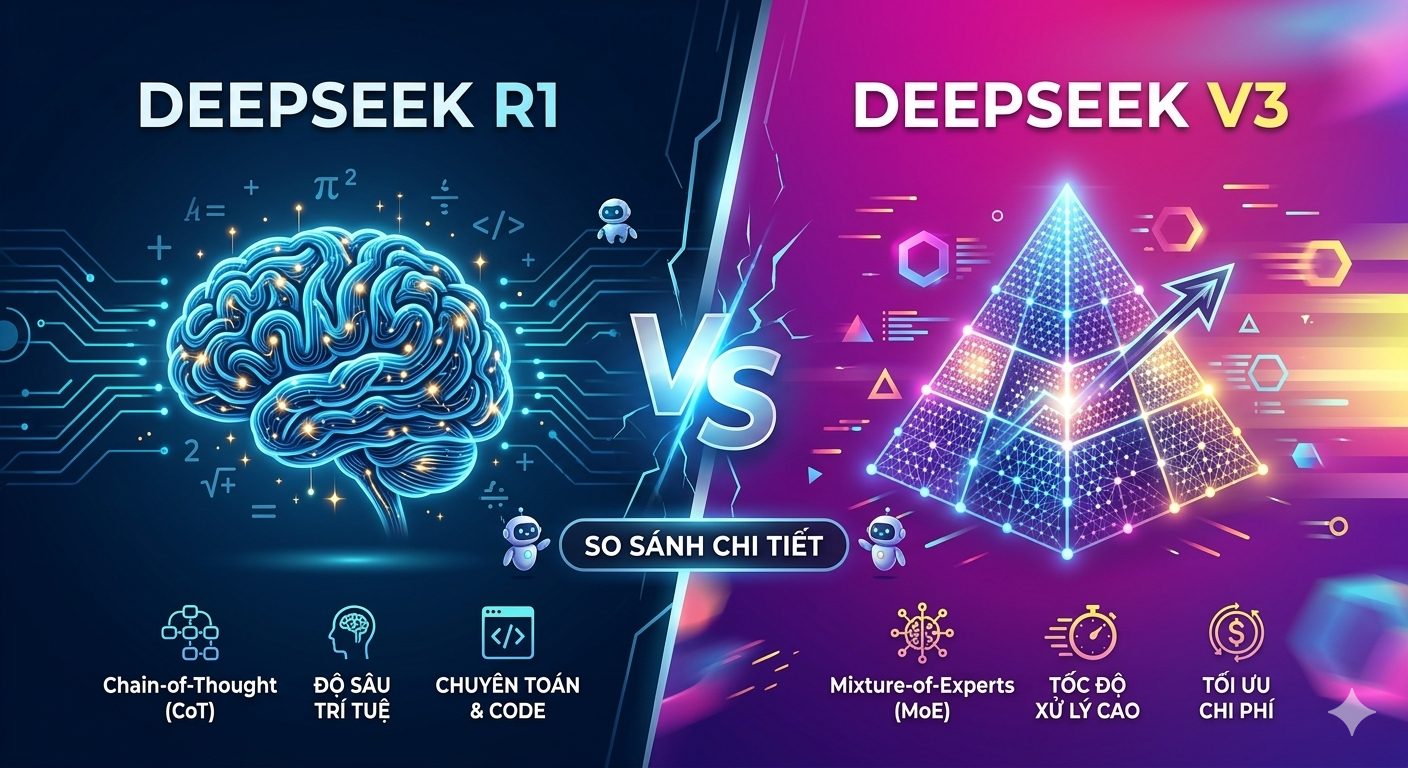
  • Model diversity ensures robust performance across varied use cases. ChatGPT excels at creative and conversational tasks, Gemini handles multimodal inputs effectively, Deepseek provides specialized capabilities, and Grok accesses real-time information. Chat Smith intelligently routes queries to the most appropriate model.
  • Reliability through redundancy means that if one model experiences issues or limitations with a particular query type, alternatives are immediately available. This architecture enhances uptime and consistency.
  • Comparative quality allows the platform to leverage the strengths of each model while mitigating individual weaknesses. Users benefit from best-in-class responses without needing to manually select models or understand their respective capabilities.
  • Future-proofing through flexible integration means Chat Smith can incorporate new models as they emerge, ensuring organizations stay at the cutting edge without rebuilding their conversational infrastructure.

For businesses seeking to deploy intelligent chatbots, virtual customer service agents, or AI-powered assistants, platforms like Chat Smith demonstrate how thoughtful architecture choices multiply the value of underlying AI technologies.

Conclusion

AI agents represent more than incremental technological progress—they fundamentally transform how work gets done. From customer engagement powered by platforms like Chat Smith to autonomous business processes that operate 24/7, these intelligent systems are becoming indispensable infrastructure for competitive organizations.

Success in the AI agent era requires strategic thinking, not just technological adoption. Organizations must identify high-impact use cases, invest in supporting infrastructure, address ethical considerations, and foster cultures that embrace human-AI collaboration.

The question is no longer whether to adopt AI agents, but how quickly you can implement them effectively. As these systems grow more capable, the gap between early adopters and laggards will widen dramatically. Whether you're exploring conversational AI, process automation, or intelligent decision support, the time to begin your AI agent journey is now.

Frequently Asked Questions (FAQs)

1. What is the difference between AI agents and traditional automation?

Traditional automation follows fixed, pre-programmed rules without adaptation—if A happens, always do B. AI agents, in contrast, perceive their environment, learn from experience, and make contextual decisions. While traditional automation handles repetitive tasks in stable conditions, AI agents manage complex, variable scenarios that require judgment. For example, a traditional chatbot matches keywords to scripted responses, whereas an AI conversational agent like those powered by Chat Smith understands context, maintains conversation history, and generates appropriate responses dynamically. AI agents employ machine learning algorithms to improve over time, while traditional automation requires manual reprogramming for every change.

2. How do AI agents learn and improve over time?

AI agents improve through several learning mechanisms. Supervised learning involves training on labeled datasets where correct responses are provided, allowing the agent to recognize patterns and generalize to new situations. Reinforcement learning enables agents to learn through trial and error—they receive rewards for successful actions and penalties for mistakes, gradually optimizing their decision-making strategies. Transfer learning allows agents to apply knowledge gained in one context to related but different scenarios, accelerating learning. Many modern agents also employ continual learning, where they update their models based on ongoing interactions.

3. Are AI agents safe and can they be trusted with important business decisions?

AI agent safety depends on implementation quality, oversight mechanisms, and appropriate use case matching. Well-designed agents with proper guardrails, human oversight, and explainability features can be highly reliable for many business decisions. However, several considerations apply: agents should undergo rigorous testing before production deployment, particularly for high-stakes applications; human-in-the-loop architectures work best for consequential decisions, with agents providing recommendations that humans review; transparency mechanisms should explain agent reasoning, especially in regulated industries; continuous monitoring detects performance degradation, bias, or unexpected behaviors; and security measures protect against adversarial attacks and data poisoning. Organizations should also implement fallback protocols for when agents encounter situations outside their training. For critical decisions involving significant financial, legal, or safety implications, AI agents are best used as decision support tools augmenting human judgment rather than fully autonomous decision-makers. As technology matures and regulatory frameworks develop, the appropriate level of agent autonomy will likely expand, but thoughtful governance remains essential.