
Perplexity and ChatGPT are two of the most talked-about AI tools in 2026 — but they are built around fundamentally different ideas of what an AI assistant should do. ChatGPT is a conversational AI optimised for dialogue, reasoning, writing, and task execution. Perplexity is an AI-powered search engine designed to retrieve and summarise real-time information from the web. Understanding the distinction between them is the key to knowing which tool belongs in your workflow — and when you might need both.
What Is ChatGPT?
ChatGPT is OpenAI's flagship consumer AI product, built on the GPT-4o model family. It is designed for extended, multi-turn conversations and excels at reasoning, writing, analysis, coding, and instruction-following across virtually any domain. ChatGPT Plus, the paid tier, also includes access to OpenAI's o1 and o3 reasoning models, image generation via DALL·E, and plugins or tools including web browsing capabilities. It has become the dominant general-purpose AI assistant for professionals, students, and developers worldwide.
What Is Perplexity?
Perplexity is an AI-native search engine that uses large language models to retrieve, synthesise, and cite information from the web in real time. Rather than returning a list of links like a traditional search engine, Perplexity generates a direct answer accompanied by numbered source citations so users can verify the information. Its core value proposition is speed and accuracy for research and fact-finding tasks. Perplexity Pro, its paid tier, adds access to multiple underlying models including GPT-4o, Claude, and its own Sonar models, along with deeper file analysis capabilities.
Perplexity vs ChatGPT: Core Difference
The most important distinction between these two tools is architectural purpose. Perplexity is built for search — its primary task is to retrieve accurate, current information from the internet and present it with citations. ChatGPT is built for conversation and reasoning — its primary task is to understand instructions, reason through problems, and generate high-quality text, code, and analysis. Both tools can overlap in practice (ChatGPT has web browsing; Perplexity can answer analytical questions), but each is purpose-optimised for a different kind of cognitive task. Using a search-first tool for deep reasoning is like using a hammer for a screw.
Perplexity vs ChatGPT: Search and Real-Time Information
Perplexity wins clearly on real-time information retrieval. Every Perplexity query draws from live web sources, producing cited answers with up-to-the-minute accuracy on news, prices, regulations, events, and research. This makes it an excellent replacement for traditional search engines when you want an answer rather than a list of links. ChatGPT's web browsing capability, while functional, is a secondary feature layered on top of a language model — it is not as consistent or citation-rich as Perplexity's core search architecture. For tasks requiring current, sourced information, Perplexity is the more reliable tool.
Perplexity vs ChatGPT: Reasoning and Writing Quality
ChatGPT is significantly stronger for reasoning, writing, and task execution. GPT-4o produces nuanced, well-structured prose across a wide range of styles. OpenAI's o1 and o3 models handle multi-step logical reasoning, mathematics, and complex analysis at a level that Perplexity's underlying models cannot match for pure generative tasks. Perplexity is not designed to draft documents, write code at length, or reason through multi-step problems — its outputs are optimised for concise, source-backed summaries rather than extended generation. If you need a 2,000-word report, a working Python script, or a strategic analysis, ChatGPT is the right tool.
Perplexity vs ChatGPT: Accuracy and Hallucination
For factual queries about current events, Perplexity has a structural advantage: because it grounds its answers in live web sources it has just retrieved, it is less likely to confabulate outdated or invented facts on recent topics. However, Perplexity is not immune to errors — it can misattribute information, cite unreliable sources, or misinterpret source material. ChatGPT's base model has a knowledge cutoff and can confidently state outdated or incorrect information if web browsing is not engaged. With web browsing enabled, ChatGPT's accuracy on current topics improves substantially, but it remains slightly less systematic in citation than Perplexity. For high-stakes factual research, always verify primary sources regardless of which tool you use.
Perplexity vs ChatGPT: Pricing
Both tools offer free tiers with meaningful capability. Perplexity's free tier provides unlimited basic searches with its own Sonar model, with rate limits on Pro model access. ChatGPT's free tier provides GPT-4o access with usage limits. Perplexity Pro costs approximately $20/month and adds access to GPT-4o, Claude, and extended file analysis. ChatGPT Plus also costs $20/month and adds GPT-4o at higher limits, o1, o3, DALL·E image generation, advanced data analysis, and plugins. At equivalent price points, ChatGPT Plus provides a broader feature set for generative tasks; Perplexity Pro is more competitive if real-time search is your primary need.
Perplexity vs ChatGPT: Use Cases
Where Perplexity Performs Best
Perplexity excels as a replacement for traditional web search when you want a synthesised answer rather than a list of links. It is ideal for quick research on current events, market prices, recent news, competitor analysis, regulatory updates, and any query where recency and citation matter most. Researchers, journalists, and analysts who need to rapidly gather sourced information from the web will find Perplexity significantly faster than opening and reading multiple browser tabs.
Where ChatGPT Performs Best
ChatGPT is the stronger choice for writing, coding, analysis, brainstorming, tutoring, and any task requiring extended generation or multi-step reasoning. Professionals who draft documents, build software, prepare reports, or need an AI thinking partner for complex problems will find ChatGPT's generative depth far superior to Perplexity's search-optimised outputs. For users who want access to the full spectrum of frontier models in one place — including ChatGPT, Claude, Gemini, and more — a multi-model platform like Chat Smith offers even greater flexibility than either standalone tool.
Can You Use Both Perplexity and ChatGPT?
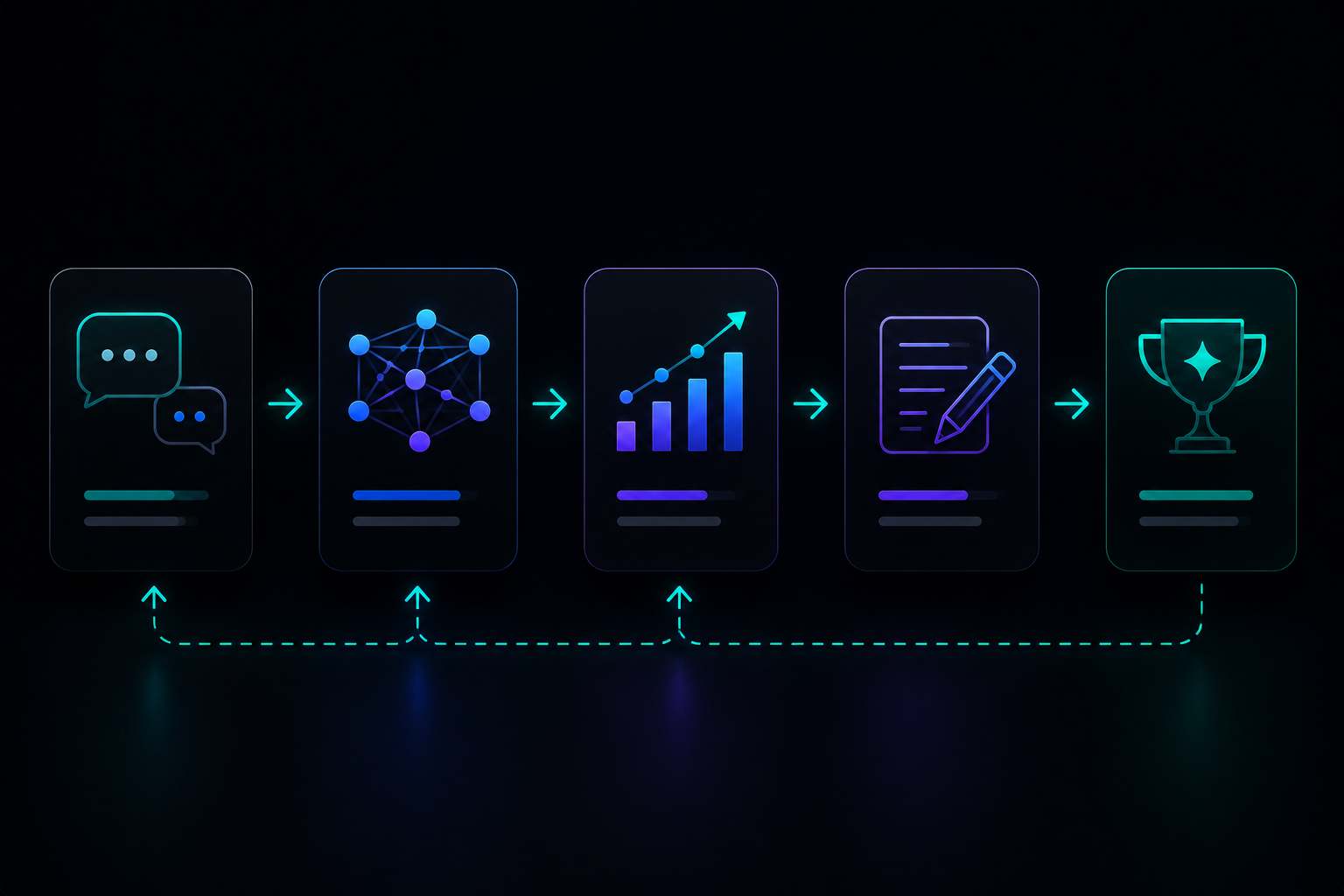
Absolutely — and many power users do. A common workflow is to use Perplexity to rapidly gather current, cited information on a topic, then feed those findings into ChatGPT for deeper analysis, synthesis, drafting, or strategic thinking. The two tools are genuinely complementary rather than competing: Perplexity retrieves and surfaces information efficiently; ChatGPT reasons about and generates with it. Users who integrate both into their workflow get the benefits of AI-powered search and AI-powered reasoning without being limited to one tool's strengths.
Access ChatGPT and Every Leading AI Model on Chat Smith
For users who want maximum output quality across every task type, the most powerful approach is not choosing between ChatGPT and Perplexity — it is accessing all the leading frontier models through a single platform. Chat Smith gives you access to ChatGPT (GPT-4o), Claude, Gemini, Grok, and DeepSeek in one interface — so you can route each task to the model best suited to handle it, compare outputs side by side, and always work with the strongest possible answer.
Frequently Asked Questions
1. Is Perplexity better than ChatGPT?
Neither is universally better — they serve different purposes. Perplexity is better for real-time, cited information retrieval from the web. ChatGPT is better for reasoning, writing, coding, and complex task execution. The right choice depends on what you are trying to accomplish.
2. Is Perplexity free to use?
Yes. Perplexity's free tier offers unlimited basic searches using its Sonar model. Perplexity Pro ($20/month) unlocks access to GPT-4o, Claude, extended file uploads, and higher usage limits on its most capable models.
3. Does ChatGPT have real-time web access?
Yes, ChatGPT Plus includes a web browsing tool that enables real-time web searches. However, its search functionality is less citation-focused and less systematic than Perplexity's core architecture, which is purpose-built around sourced retrieval.
4. Which is more accurate — Perplexity or ChatGPT?
For current events and recent facts, Perplexity is generally more reliable because its answers are grounded in live web sources with citations. For reasoning, analysis, and tasks that draw on deep knowledge rather than current events, ChatGPT's models are more capable. Neither is infallible — always verify important information from primary sources.
5. Can I use Perplexity and ChatGPT together?
Yes, and many professionals do. A productive workflow is to use Perplexity to rapidly surface current, cited information, then bring those findings into ChatGPT for deeper analysis, writing, or reasoning. The two tools are complementary rather than competing.
6. Which is better for research: Perplexity or ChatGPT?
For rapid, cited, real-time research — finding current facts, news, and sourced summaries quickly — Perplexity is the stronger tool. For in-depth analytical research requiring synthesis, critical reasoning, long-form writing, and working with documents you upload, ChatGPT provides superior depth. Many researchers use Perplexity for information gathering and ChatGPT for analysis and drafting.