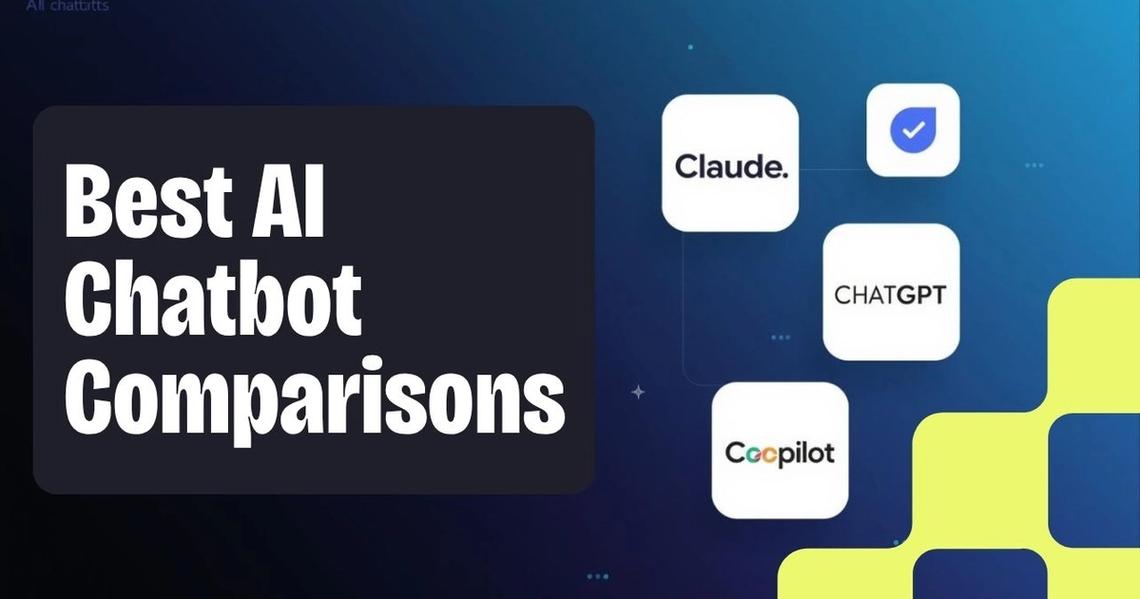
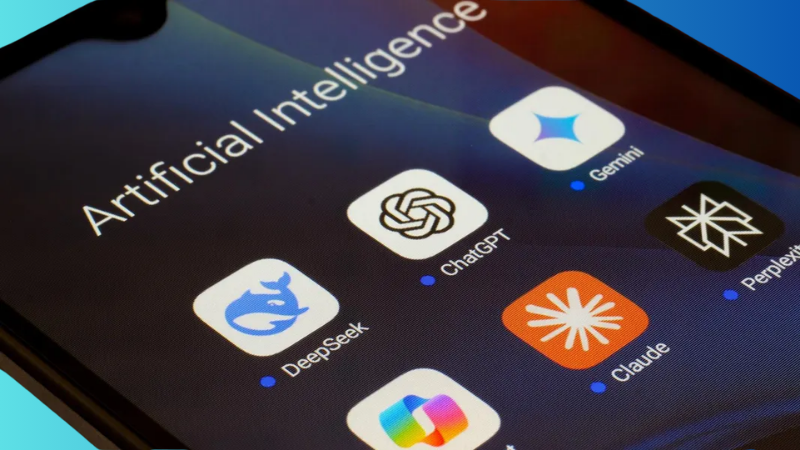
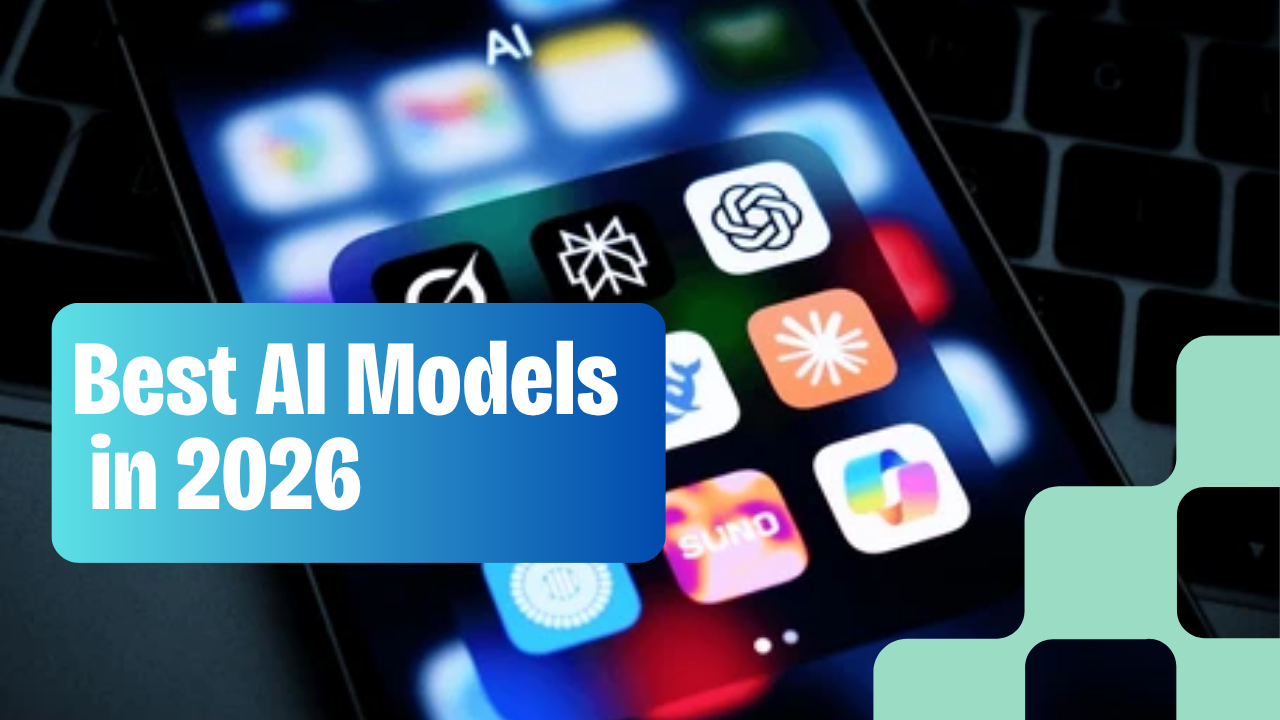
AI chatbots have gone from novelty to necessity. Whether you need help writing an email, debugging code, researching a topic, or simply thinking through a problem, there is now a chatbot built for it. But with so many options competing for attention — ChatGPT, Claude, Gemini, Copilot, Perplexity, and more — choosing the right one has never been more confusing.
We put the most popular AI chatbots to the test across a range of real-world tasks. Here is our breakdown of the best AI chatbot for every use case in 2026.
What Makes a Great AI Chatbot?
Before diving into rankings, it helps to know what we evaluated. A great AI chatbot needs to do more than sound convincing. We looked at five core criteria:
- Accuracy: Does it give correct, trustworthy answers — and admit when it does not know?
- Reasoning depth: Can it handle nuanced, multi-step questions or just surface-level queries?
- Writing quality: How natural, clear, and well-structured are its responses?
- Specialization: Does it excel in a particular domain like coding, research, or creative writing?
- Ease of use and access: Is it easy to start with? Is a free tier available?
1. Claude — Best Overall for Thoughtful, Long-Form Reasoning
Claude, built by Anthropic, has emerged as the go-to AI chatbot for users who prioritize depth, nuance, and reliability. Where many chatbots race to give you an answer, Claude takes time to reason through problems clearly and flag uncertainty when it exists.
Its writing quality is consistently among the best available. Whether you are drafting a business proposal, summarizing a dense research paper, or working through a complex ethical question, Claude delivers responses that feel genuinely thoughtful rather than pattern-matched.
Claude 3.5 Sonnet and the newer Claude 3.7 models support extremely large context windows — useful for uploading entire documents, transcripts, or codebases and asking nuanced questions about them. It also handles coding well, though it is most celebrated for its writing and analytical abilities.
Best for: Long-form writing, research summarization, document analysis, nuanced conversation, and professionals who want a reliable thinking partner.
Free plan available: Yes. Claude.ai offers a free tier with access to capable models.
2. ChatGPT — Best for Versatility and Plugin Ecosystem
OpenAI's ChatGPT remains the most widely used AI chatbot in the world, and for good reason. Its GPT-4o model is fast, capable, and genuinely versatile — it can write code, generate images, browse the web, analyze spreadsheets, and hold fluid conversations all within the same interface.
ChatGPT's biggest strength is its ecosystem. With custom GPTs, a robust plugin marketplace, and deep integrations across tools like Microsoft 365, it serves both casual users and power users extremely well. The memory feature — which lets it remember your preferences across sessions — is also a standout for long-term users.
The main downside is that the free tier is limited, and ChatGPT can occasionally be overconfident, presenting incorrect information with too much certainty.
Best for: General productivity, image generation, browsing, coding help, and users who want an all-in-one AI assistant.
Free plan available: Yes, with limited GPT-4o access.
3. Google Gemini — Best for Google Workspace Integration
Google's Gemini (formerly Bard) has grown into a genuinely capable AI chatbot, particularly for users already embedded in the Google ecosystem. Its native integration with Gmail, Docs, Sheets, and Google Search gives it a real edge for professionals who live in Google Workspace.
Gemini 1.5 Pro and the newer Gemini 2.0 models feature multimodal capabilities — understanding images, audio, video, and text simultaneously. This makes it uniquely suited for tasks that involve mixed-media content. It also benefits from real-time Google Search access, giving it up-to-date information most other chatbots lack by default.
Where Gemini falls short is depth of reasoning. For complex analytical tasks, it tends to produce competent but somewhat surface-level responses compared to Claude or GPT-4o.
Best for: Google Workspace users, real-time search, multimodal tasks, and students who want a capable free chatbot.
Free plan available: Yes, with generous free access.
4. Microsoft Copilot — Best for Office 365 and Enterprise Users
Microsoft Copilot is powered by OpenAI's models and baked directly into Windows, Edge, and the Microsoft 365 suite. For enterprise users, this integration is its defining advantage. Copilot can draft emails in Outlook, generate slides in PowerPoint, analyze data in Excel, and summarize Teams meetings — all without leaving the tools you already use.
The standalone Copilot chatbot (available at copilot.microsoft.com) is free and includes Bing-powered web search, image generation via DALL-E, and solid general-purpose conversation. It is a strong free option for users who do not need deep customization.
Best for: Microsoft 365 users, enterprise productivity, free web browsing with AI, and Windows users looking for a built-in assistant.
Free plan available: Yes, free with Bing integration.
5. Perplexity AI — Best for Research and Real-Time Web Answers
Perplexity AI takes a different approach: instead of generating creative content or writing essays, it functions as a research-grade AI search engine. Every answer it gives is sourced and cited, pulling from across the web in real time. If you need to stay current on fast-moving topics — news, market data, scientific publications — Perplexity is hard to beat.
Its interface is clean and citation-first, which makes it highly trustworthy for factual lookups. The Pro version lets you choose which underlying AI model (GPT-4, Claude, Gemini) Perplexity uses to generate answers, making it one of the most flexible research tools available.
Best for: Researchers, journalists, students, and anyone who wants cited, up-to-date answers rather than generated text.
Free plan available: Yes, with daily Pro query limits on the free tier.
6. Meta AI — Best Free Chatbot for Social Media Users
Meta AI, powered by the Llama 3 model, is now embedded directly into WhatsApp, Instagram, Messenger, and Facebook. If you spend significant time on Meta's platforms, this chatbot is the most frictionless AI assistant available — there is nothing to install or sign up for separately.
For casual use, quick questions, image generation, and in-chat assistance, Meta AI punches above its weight. It is not the deepest reasoner or the best writer, but its accessibility across billions of devices makes it one of the most practically significant AI chatbots in the world.
Best for: Casual users, WhatsApp and Instagram users, quick questions, image generation, and anyone wanting a zero-setup AI assistant.
Free plan available: Yes, entirely free.
Quick Comparison: Best AI Chatbot by Use Case
Here is a fast reference guide for matching your need to the right chatbot:
- Long-form writing and analysis → Claude
- All-around versatility and image generation → ChatGPT
- Google Workspace productivity → Gemini
- Microsoft 365 and enterprise tasks → Copilot
- Research with real-time citations → Perplexity AI
- Casual use inside social apps → Meta AI
Which AI Chatbot is Best for Free?
If budget is a constraint, you have excellent options. Google Gemini offers one of the most capable free tiers for general users. Claude's free plan is competitive for thoughtful writing and analysis. Microsoft Copilot is free and web-connected. And Meta AI is entirely free within platforms you already use.
For most users, starting with Claude or Gemini on their free tiers and upgrading only if you hit limits is the smartest move.
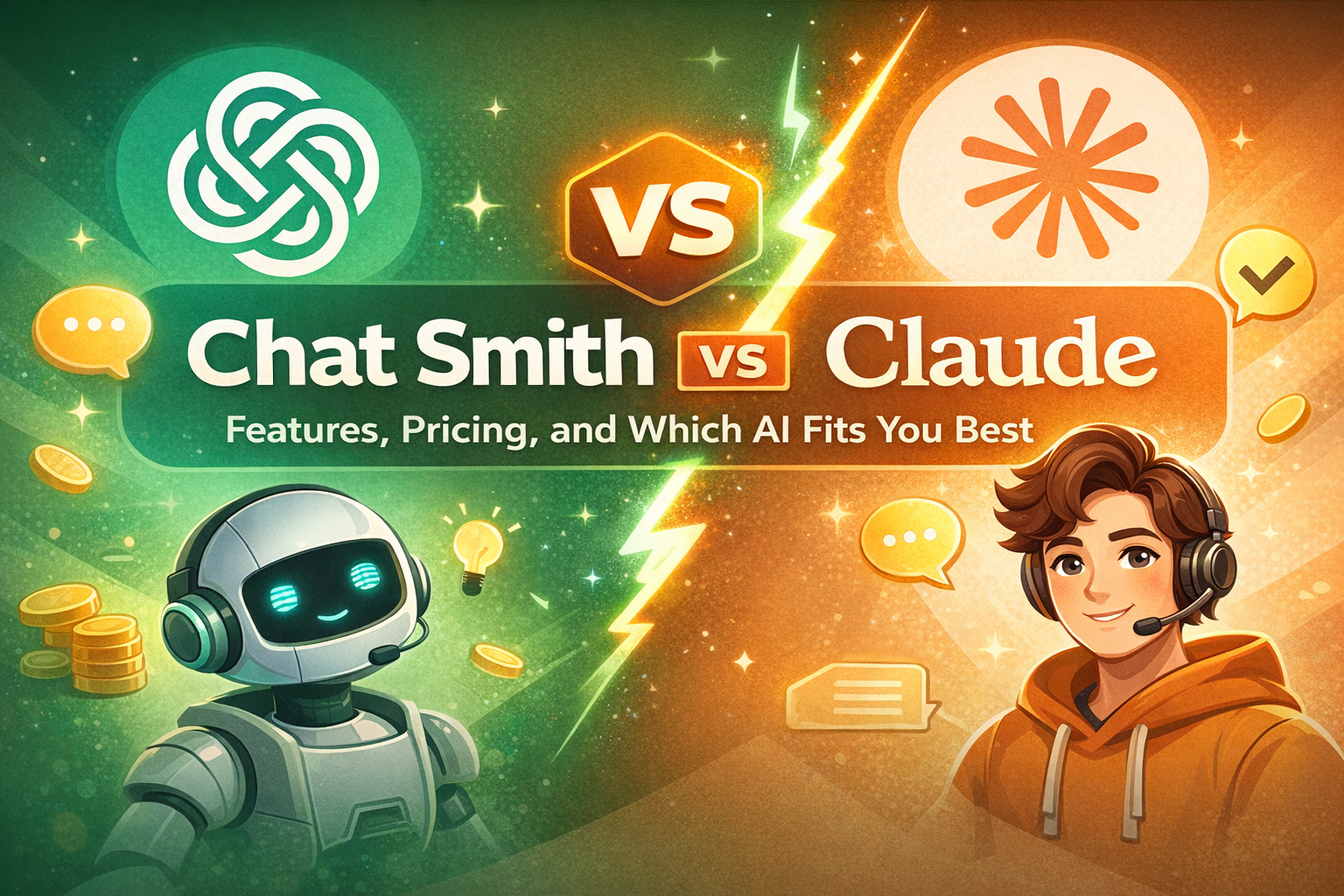
Chat Smith — Compare Multiple AI Chatbots in One Place
With so many strong AI chatbots available, one of the biggest challenges is not just choosing one — but knowing which performs best for your specific task. Each model has its own strengths: Claude for deep reasoning, ChatGPT for versatility, Gemini for real-time context, and Perplexity for sourced answers.
A practical way to cut through this is to test the same prompt across multiple chatbots and compare their responses. This is where tools like Chat Smith become useful. Instead of switching between platforms, Chat Smith allows you to run one question across models like Claude, GPT, Gemini, Grok, and DeepSeek simultaneously and view their answers side by side.
For users who want to evaluate quality, spot differences in reasoning, or simply find the clearest explanation faster, this multi-model approach can significantly improve how you use AI chatbots in practice.
Conclusion
AI chatbots in 2026 are no longer one-size-fits-all tools. Each platform excels in different areas — from Claude’s thoughtful reasoning and ChatGPT’s versatility to Gemini’s real-time data and Perplexity’s citation-first approach.
The best chatbot for you depends on what you need to get done. For writing and analysis, Claude stands out. For all-around productivity, ChatGPT remains a top choice. For research and up-to-date answers, Gemini and Perplexity are hard to beat.
In practice, many users benefit from using more than one chatbot — or comparing outputs across models — to get the most accurate and useful results.
Frequently Asked Questions
1. What is the best AI chatbot in 2026?
There is no single best chatbot for everyone. Claude is strongest for deep reasoning and writing, ChatGPT for versatility, Gemini for real-time information, and Perplexity for research with sources.
2. Is ChatGPT better than Claude?
It depends on your use case. Claude is generally better for structured, thoughtful, long-form responses, while ChatGPT is more versatile and feature-rich for everyday tasks.
3. Which AI chatbot is best for free?
Google Gemini and Microsoft Copilot offer some of the most capable free experiences. Claude also has a strong free tier for writing and analysis, while Meta AI is completely free within social apps.