logoChat Smith
AI Guide

Best AI for Learning in 2026: Top Tools for Every Learner

Discover the best AI for learning in 2026. Compare top tools like Claude, ChatGPT, and Gemini for students and professionals to master any subject faster.
Best AI for Learning in {{year}}: Top Tools for Every Learner
A
Aiden Smith
Mar 25, 2026 ・ 13 mins read

AI has become the default learning companion for students, professionals, and self-learners in 2026. Over 90% of students now report using AI tools to support their studies, and the landscape of available tools has grown from a handful of general-purpose chatbots into a rich ecosystem of tutors, writing assistants, concept explainers, research tools, flashcard generators, and personalised learning platforms. The challenge is no longer finding an AI tool for learning — it is knowing which one to use for which task.

This guide covers the best AI tools for learning in 2026 across every major use case, from concept explanation and homework help to writing, maths, language learning, and professional skill development. And for anyone who wants to run a question through multiple leading AI models simultaneously and see which one explains it most clearly, Chat Smith gives you exactly that.

What Makes an AI Tool Good for Learning?

The best AI tools for learning share a set of core qualities that separate them from general-purpose AI assistants. They explain concepts in a way that builds genuine understanding rather than just providing answers. They adapt to the learner's level — breaking down complexity for beginners and going deeper for advanced students. They are accurate enough to trust, with low hallucination rates on factual content. And critically, the best learning AI tools encourage active engagement rather than passive consumption — guiding the learner to think through problems rather than simply serving up the solution.

How you use any AI tool for learning matters as much as which tool you choose: an AI that does your homework for you is not helping you learn, but an AI that walks you through the reasoning step by step is one of the most powerful tutors ever built.

Best General-Purpose AI Models for Learning

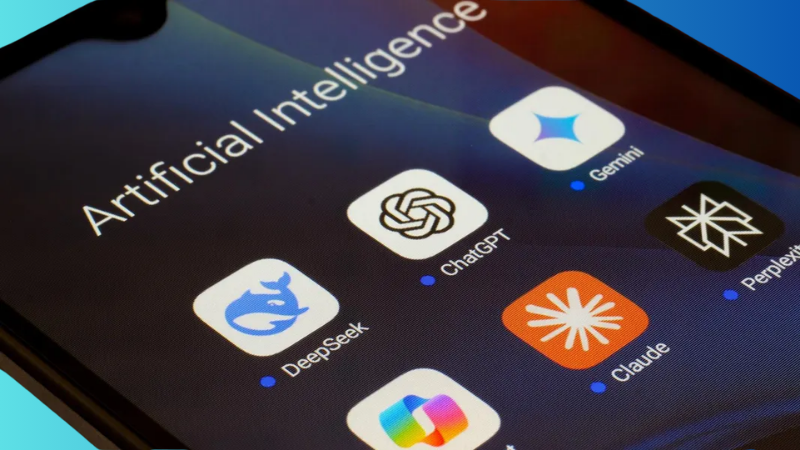
The three dominant general-purpose AI models — ChatGPT, Gemini, and Claude — are the most versatile learning tools available because they can explain almost anything, answer follow-up questions, adjust their explanation style on request, and work across subjects without any specialist setup. Understanding what each one does best for learning helps you use the right model for the right task.

ChatGPT — Best All-Round Learning Assistant

ChatGPT remains the most widely used AI learning tool in the world, and for good reason. It handles the broadest range of subjects with consistently useful explanations, supports follow-up questions naturally, can generate practice quizzes and flashcards on demand, and is available to students on a capable free tier. Its breadth of training data means it can explain topics across science, history, literature, mathematics, coding, and professional subjects with equal fluency.

ChatGPT also supports a Code Interpreter that can run Python code and demonstrate results — making it particularly effective for students learning programming or data analysis. For a general-purpose AI tutor that handles almost any subject a student is likely to encounter, ChatGPT's combination of capability, accessibility, and familiarity makes it the most practical starting point for most learners.

Google Gemini — Best for Research-Integrated Learning

Gemini's defining advantage for learners is its real-time integration with Google Search, which means its explanations can draw on current information rather than being limited to a training cutoff. For students researching current events, recent scientific developments, or rapidly evolving topics, Gemini can provide explanations grounded in the latest available information — a meaningful advantage over models with static knowledge.

Gemini also integrates natively with Google Docs, Sheets, and Drive, making it a natural fit for students already working in the Google Workspace environment. Its free tier is generous, offering real-time web access at no cost, making it the most capable free AI learning tool for students who need current information built into their answers.

Claude — Best for Deep Explanations and Long-Form Understanding

Claude is the general-purpose model most praised by learners for the quality of its explanations. It follows instructions precisely, produces structured and nuanced responses, and is particularly strong at breaking down complex concepts into clear, logical steps without oversimplifying.

Claude's low hallucination rate makes it more reliable than competing models when accuracy matters — for science, mathematics, law, medicine, or any subject where a wrong answer is worse than no answer. Its large context window allows students to upload entire textbook chapters, lecture notes, or research papers and ask Claude to explain, summarise, or test their understanding of the material. For learners who want thorough, accurate, structured explanations on demanding subject matter, Claude consistently produces the highest-quality output among the general-purpose models.

Best Specialist AI Tools for Learning

Beyond the general-purpose models, a set of specialist platforms have been purpose-built for learning workflows. These tools go deeper than a general AI assistant on specific learning tasks — guided tutoring, maths problem-solving, writing feedback, note organisation, and language practice.

Khanmigo — Best AI Tutor for Guided Learning

Khanmigo, built by nonprofit Khan Academy on GPT-4 technology, is one of the most pedagogically sophisticated AI learning tools available. Unlike most AI tools that simply provide answers, Khanmigo is specifically designed to guide learners toward finding answers themselves — asking questions, prompting reasoning, and building genuine understanding rather than delivering solutions. It is integrated with Khan Academy's world-class content library covering maths, sciences, humanities, coding, and social studies, which means its tutoring is grounded in structured, curriculum-aligned content rather than freeform generation.

Common Sense Media rated Khanmigo four stars, ranking it above ChatGPT and Bard specifically for educational use. It supports learners of all ages, with parental safeguards for younger students, and is particularly effective for maths and science subjects where step-by-step guided reasoning makes the biggest difference to understanding.

NotebookLM — Best for Studying Your Own Notes and Materials

Google's NotebookLM is one of the most practically useful AI tools for student learning because it turns your own uploaded materials into an interactive study assistant.

Upload lecture slides, textbook chapters, reading lists, or revision notes — and NotebookLM creates a private knowledge base you can interrogate directly. Ask it to summarise a chapter, explain a concept in simpler terms, generate practice questions from your notes, or identify the key themes across multiple documents. Because NotebookLM only answers from your uploaded sources, it eliminates the hallucination risk of general-purpose AI and keeps all answers grounded in the exact material you are studying. For exam preparation, revision, and making sense of complex lecture content, NotebookLM is consistently rated as one of the most effective AI study tools available in 2026.

Wolfram Alpha — Best AI for Maths and STEM Learning

Wolfram Alpha is the most reliable AI tool for maths, science, and STEM subjects that require precise, verifiable answers rather than explanatory prose. It solves equations, differentiates and integrates calculus expressions, handles statistical calculations, interprets chemical formulas, and works through physics problems with step-by-step working shown.

Unlike general AI models that can produce plausible but incorrect maths, Wolfram Alpha uses a computational knowledge engine that produces verified answers — making it an essential tool for STEM students who need to be certain their working is correct. It is best used in combination with a general AI model: use Wolfram Alpha for computational accuracy, and use Claude or ChatGPT for conceptual explanation and context.

Grammarly — Best AI for Writing and Essay Development

Grammarly is the most widely adopted AI writing tool among students, with AI-powered grammar correction, style suggestions, tone adjustment, and clarity improvements available in real time as you write. It integrates directly into browsers, Google Docs, Microsoft Word, and most writing environments, making it a seamless layer of feedback rather than a separate tool.

For students developing their academic writing, Grammarly's ability to explain why a suggestion improves a sentence — rather than just making the change silently — makes it genuinely educational as well as corrective. Its premium tier adds clarity scores, engagement analysis, and plagiarism detection, making it a comprehensive writing development tool for serious academic work.

Quizlet — Best AI for Flashcards and Memorisation

Quizlet has integrated AI to become one of the most effective tools for active recall and spaced repetition learning, which remain the most evidence-backed methods for long-term memorisation. Its AI features can automatically generate flashcard sets from uploaded notes or text, create practice tests, and adapt the difficulty of questions based on your performance.

For students learning vocabulary, definitions, formulas, dates, or any content that benefits from repeated active recall, Quizlet's AI-enhanced study modes provide a more effective memorisation workflow than passive re-reading or highlighting. Its free tier is capable for most study needs, making it accessible to students at all levels.

Perplexity AI — Best for Fact-Checked Learning with Sources

Perplexity is valuable for learners because it provides sourced, cited answers to questions — meaning every claim it makes is backed by a clickable reference the learner can verify. This is particularly useful in academic contexts where understanding where information comes from is as important as the information itself. Its Academic focus mode prioritises peer-reviewed and scholarly sources, making it appropriate for higher-level study where source quality matters.

For students who want to go beyond an AI's explanation and actually understand the original sources behind it, Perplexity's citation-first approach builds information literacy alongside subject knowledge.

Best AI for Learning by Use Case

Best AI for school students (K–12)

Khanmigo is the strongest choice for school-age learners because it is specifically designed to guide rather than give answers, is curriculum-aligned, and has appropriate safety features for younger users.

Quizlet is the best complement for memorisation and active recall practice. Google Gemini's free tier is well-suited for research tasks and integrates naturally with Google Classroom environments that most schools use.

Best AI for university and college students

University students benefit most from a combination of Claude for deep conceptual explanation and document analysis, NotebookLM for studying their own lecture notes and readings, Grammarly for essay and academic writing development, and Perplexity for sourced research with citation trails. ChatGPT remains a strong general-purpose tutor for any subject, and Wolfram Alpha is essential for any course with a quantitative component.

Best AI for professional and skills learning

Professionals learning new skills — coding, data analysis, business strategy, language acquisition, or technical subjects — benefit most from Claude's precision and depth for conceptual explanation, ChatGPT's breadth across technical domains, and Gemini's ability to pull in current information for rapidly evolving fields.

For coding specifically, Claude is the strongest AI tutor for understanding complex logic and debugging, while ChatGPT's Code Interpreter is excellent for hands-on execution and experimentation.

Best AI for language learning

ChatGPT and Claude are both excellent language learning companions — they can explain grammar rules, provide vocabulary in context, correct written exercises, engage in conversation practice, and adapt their language level to match the learner.

ChatGPT supports over 50 languages with high quality, making it the most accessible general language tutor. For structured language learning with gamification, spaced repetition, and curriculum progression, Duolingo's AI Max subscription, which uses GPT-4 technology, remains the most popular dedicated language learning platform.

How to Build an Effective AI Learning Stack in 2026

Most learners do not need every tool in this guide. The most effective AI learning stack for the majority of students is: one general-purpose AI model for explanations and tutoring (Claude for depth, ChatGPT for breadth, or Gemini for current information), one note and document tool (NotebookLM for your own materials), one writing assistant (Grammarly), and one active recall tool (Quizlet). Add Wolfram Alpha for any STEM-heavy subjects and Khanmigo for younger learners who benefit from guided tutoring.

The key principle is to use AI to deepen understanding rather than shortcut it — asking an AI to explain why something works, testing yourself on AI-generated questions, and using AI feedback to improve your own writing will build genuine skills in a way that simply asking AI for answers will not.

Chat Smith: Multi-Model AI for Deeper Learning

As AI tools continue to expand, the challenge is no longer just choosing the right one — but getting the best explanation for each problem. Different models excel in different ways: some offer clearer reasoning, others better examples, or more up-to-date context.

A powerful learning technique is to run the same question across multiple AI models and compare their answers. Seeing different explanations for the same concept often leads to deeper understanding.

Chat Smith supports this approach by letting you ask one question and view responses from models like Claude, GPT, Gemini, Grok, and DeepSeek side by side. Used alongside tools like NotebookLM, Grammarly, and Quizlet, it helps learners move beyond quick answers and build real comprehension.

Frequently Asked Questions

1. What is the best AI for learning in 2026?

For most learners, ChatGPT is the best all-round AI learning tool due to its breadth, accessibility, and capable free tier. Claude is the best choice for deep, structured explanations on complex subjects. Khanmigo is the best guided tutor for school-age learners. NotebookLM is the best tool for studying your own uploaded notes and materials. Grammarly is the best AI for writing development.

2. Is Claude or ChatGPT better for learning?

Claude produces more precise, structured, and accurate explanations, particularly for complex or technical subjects where getting the answer exactly right matters. ChatGPT is more versatile across a wider range of topics and has a stronger free tier for everyday use. For serious academic study where accuracy is critical, Claude is generally preferred. For everyday learning across a broad range of subjects, ChatGPT is the more accessible option.

3. Can AI replace a human tutor?

AI tutors have become genuinely powerful learning tools — available 24 hours a day, infinitely patient, and capable of adapting explanations to any level. For concept explanation, practice generation, and on-demand feedback, AI tutors often match or exceed what a human tutor provides for the same time investment. However, human tutors still have advantages in motivation, accountability, deep subject mentorship, and understanding a student's individual learning context over time. The most effective learning setups in 2026 combine AI tools for on-demand support with human guidance for deeper developmental feedback.

4. Is Gemini or ChatGPT better for students?

Gemini's free tier is more capable than ChatGPT's, offering real-time web access and generous usage limits at no cost — making it the stronger free option for students. ChatGPT's paid tier (Plus at $20 per month) unlocks a significantly more capable model for complex learning tasks. For Google Workspace users, Gemini's integration with Docs and Drive creates a more seamless study workflow. For students not tied to Google's ecosystem, ChatGPT's broader familiarity and plugin ecosystem give it an edge.

5. What is the best free AI learning tool?

Google Gemini's free tier is the most capable free AI learning tool for general subject questions with real-time web access. NotebookLM is the best free tool for studying your own uploaded documents. Quizlet's free tier is the best free active recall and flashcard tool. Khanmigo offers a paid tier but is the most educationally rigorous AI tutor for school subjects.

6. How should I use AI to learn without cheating?

Use AI to explain concepts you do not understand, generate practice questions to test yourself, provide feedback on your own written work, and help you identify gaps in your knowledge — not to produce work you submit as your own. The most educationally valuable use of AI tools like Claude or ChatGPT via Chat Smith is as an always-available tutor: ask it to explain something three different ways until it makes sense, challenge its answers with follow-up questions, and use its responses as a starting point for your own thinking rather than a finishing line.

footer-cta-image

Related Articles