Most AI tools answer questions. AI agents go a step further: you give them a goal, and they work out the steps, use tools, and carry out the task on your behalf, whether that means researching a topic, fixing a bug in your code, or booking a meeting.

This guide explains what AI agents are, how they differ from chatbots and assistants, how they work, their key components and types, real examples in use today, and the benefits and risks to understand before you rely on one.

chat smith pro

What Are AI Agents?

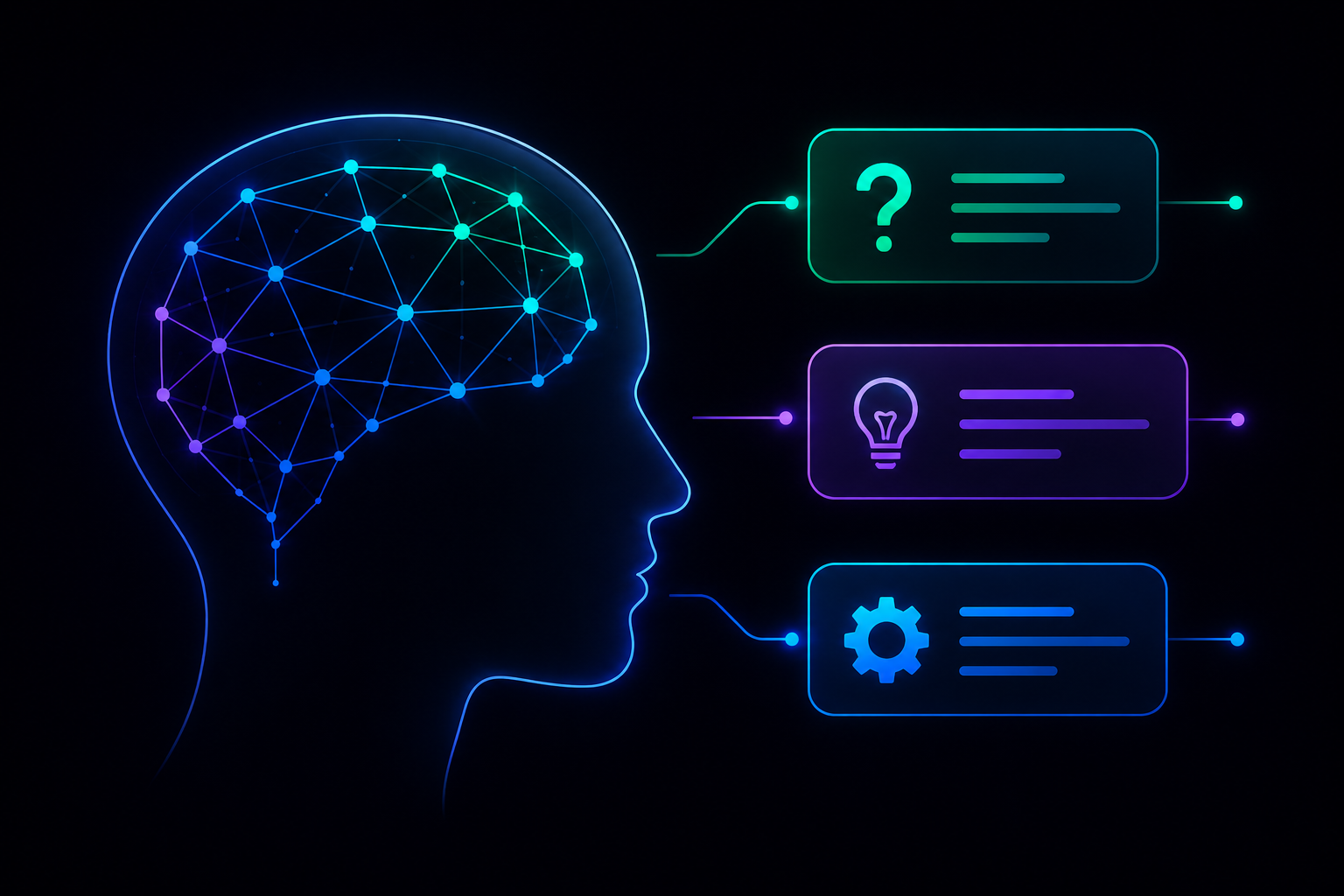
An AI agent is a software system that can pursue a goal with a degree of independence. It observes its environment, decides what to do, takes actions using tools such as web search, apps, or code, checks the results, and keeps going until the job is done or it needs human input. Most modern agents are built on large language models, which give them the ability to understand instructions, plan, and reason in plain language.

Here is the difference in practice. Ask a regular chatbot "What are some good hotels in Lisbon?" and it gives you a list. Ask an AI agent to "find a hotel in Lisbon under $150 a night near the old town for May 10 to 13, and put the best three options in a spreadsheet," and it can search booking sites, compare prices and locations, filter the results, and create the spreadsheet, checking its own work along the way.


AI Agents vs Chatbots vs AI Assistants

These terms overlap, but they describe different levels of autonomy.

ChatbotAI assistantAI agent
Main jobAnswer questions in a conversationHelp you complete tasks when askedPursue a multi-step goal on its own
AutonomyLow: responds to each messageMedium: follows your instructions step by stepHigh: plans and acts with limited supervision
Tool useUsually noneSome, such as search or calendarsExtensive: apps, code, files, browsers
ExampleA website FAQ botA voice assistant setting a reminderA coding agent that finds and fixes a bug across a project

In practice, many products blend these roles. A modern AI chatbot may act as an assistant for some requests and switch into agent mode for bigger tasks, which is why conversational AI and agents are increasingly converging.

How Do AI Agents Work?

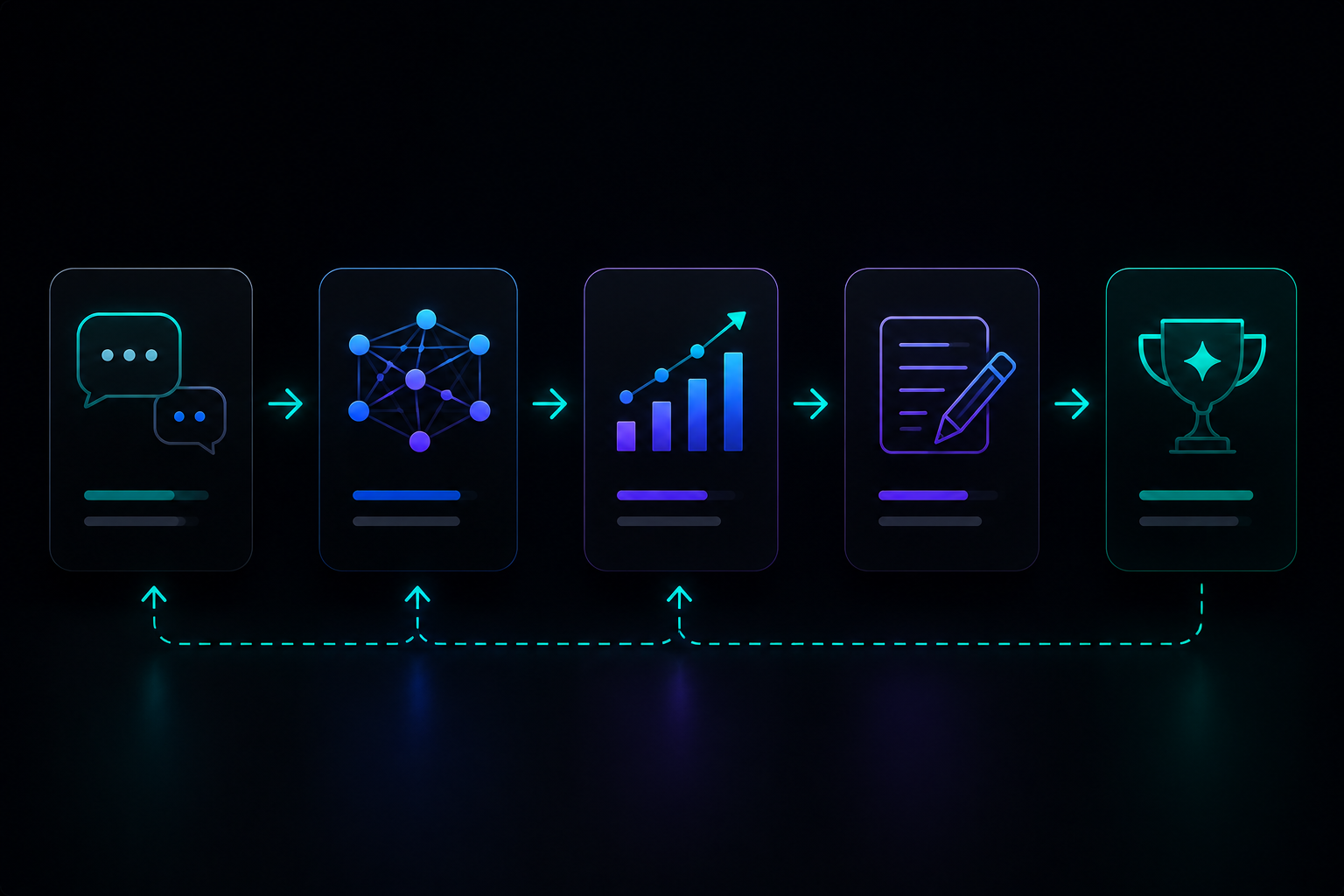
Most AI agents run in a loop until their goal is met. Here is how that loop plays out for the Lisbon hotel search:

StepWhat the agent doesHotel search example
PerceiveReads the goal and gathers relevant informationUnderstands the dates, budget, and location
PlanBreaks the goal into smaller stepsSearch sites, filter by price, compare locations, build a sheet
ActUses tools to carry out each stepRuns searches and opens hotel pages
Observe and adjustChecks results and changes course if neededNotices one hotel is sold out and finds a replacement
DeliverReturns the final result or asks for helpShares a spreadsheet with three options

The language model acts as the agent's brain, deciding what to do next at each step, while tools give it hands to act in the world. Some agents also improve over time through techniques like reinforcement learning, which rewards actions that lead to successful outcomes.

Key Components of an AI Agent

Behind the scenes, a capable agent combines several building blocks.

ComponentRoleExample
ModelUnderstands goals, reasons, and decides next stepsA large language model such as GPT, Claude, or Gemini
ToolsLet the agent take actionsWeb search, email, code execution, a browser
MemoryKeeps track of progress and past contextNotes on completed steps and user preferences
KnowledgeGives access to relevant documents and dataA company wiki searched through RAG
GuardrailsLimit what the agent can do and when it must askApproval required before sending emails or making payments

Standards such as the Model Context Protocol make it much easier to connect agents to tools and data, while retrieval-augmented generation helps them ground their work in accurate, up-to-date information.

Types of AI Agents

AI textbooks traditionally group agents by how they make decisions, from simple rule-followers to systems that learn.

TypeHow it decidesExample
Simple reflex agentReacts to the current input with fixed rulesA thermostat or keyword-based support bot
Model-based reflex agentKeeps an internal picture of the world to handle missing informationA robot vacuum mapping a room
Goal-based agentChooses actions that move it toward a goalA navigation app planning a route
Utility-based agentWeighs trade-offs to pick the best outcomeA system balancing travel time, cost, and comfort
Learning agentImproves its behavior from experienceA recommendation system that adapts to your choices

Today's LLM-powered agents often combine several of these traits: they pursue goals, weigh options, and adapt based on feedback.

Examples of AI Agents Today

Coding agents are among the most mature examples. Tools such as Claude Code, OpenAI Codex, and agent modes in code editors can read an entire codebase, plan changes, edit multiple files, run tests, and fix what breaks, turning natural language programming into a practical workflow. Research agents, such as ChatGPT Deep Research and similar modes in other apps, plan dozens of searches, read the sources, and compile a cited report.

Other agents operate a computer or browser directly, filling in forms and navigating websites, while customer service agents resolve requests end to end, from checking an order to issuing a refund. Increasingly, companies combine several specialized agents into multi-agent systems, with protocols like Google's Agent2Agent (A2A) letting them coordinate with one another.

Benefits and Risks of AI Agents

Agents can save enormous amounts of time, but giving software the ability to act also raises the stakes.

BenefitsRisks
Complete multi-step tasks without constant supervisionSmall mistakes can compound across many steps
Work across many apps and data sources at onceBroad access creates security and privacy risks
Run around the clock and scale easilyMalicious content can trick agents through prompt injection
Free people for higher-value workAccountability is unclear when an agent makes a costly error

The safest approach is to keep a human in the loop for anything consequential, give agents only the permissions they need, and write clear, specific instructions, a skill covered in our guide to prompt engineering.

Try Agent-Style AI in Chat Smith

You do not need a developer setup to experience agent-style AI. Chat Smith, a free AI chatbot for Android, iOS, and the web, includes Deep Research, which plans and runs multiple searches before compiling its findings, along with Web Search for current information. You can run these with leading models such as GPT-6 Sol, Claude Sonnet 5, and Gemini 3.5 Flash, and switch models to compare how each one approaches the same task.

Free users get limited use, and Chat Smith Pro raises those limits for $9.99 per month or $39.99 per year.

Are AI Agents Ready to Work for You?

For well-defined tasks with clear success criteria, such as researching a topic, drafting a report, or fixing a bug, AI agents are already genuinely useful. For high-stakes or open-ended work, they are best treated as capable assistants whose output still needs review and approval. The technology is improving quickly, so the smartest move today is to start with lower-risk tasks, learn where agents shine and where they stumble, and expand their responsibilities as trust is earned.

Frequently Asked Questions

An AI agent is a system that can plan a sequence of steps and take actions, like browsing the web, calling tools, or writing files, to accomplish a goal rather than just answering a single question. A regular chatbot typically responds to one message at a time without independently deciding on multi-step actions.

logo chat smith

Editorial Team

Managing Editor

The Chat Smith Editorial Team brings together AI enthusiasts, researchers, and creators to make AI accessible and practical. We share trends, tool reviews, and actionable guides that help individuals and businesses stay informed, boost productivity, and get more from AI.

Share this article

Related Articles