Natural language programming lets you build software by describing what you want in plain English instead of writing every line of code yourself. Thanks to modern AI, a sentence like "make a script that renames all the photos in this folder by date" can now turn into working code in seconds.
This guide explains what natural language programming is, how it works, how it compares with traditional coding, the main tools, what it is good at, where it falls short, and how to write better programming prompts.
What Is Natural Language Programming?
Natural language programming is an approach to software development in which you describe a program's behavior in everyday language and an AI system translates that description into code in a programming language such as Python, JavaScript, or SQL. Instead of memorizing syntax, you explain the goal, the inputs, and the result you expect.
It is made possible by natural language processing and large language models trained on both human language and huge amounts of source code. Note that the abbreviation "NLP" usually refers to natural language processing, the broader field of computers understanding language, while natural language programming is one specific application of it.
The idea dates back decades, but early attempts were too rigid to be practical. Recent advances in generative AI turned it into an everyday workflow, and the casual, conversational way many people now build software is often called "vibe coding."
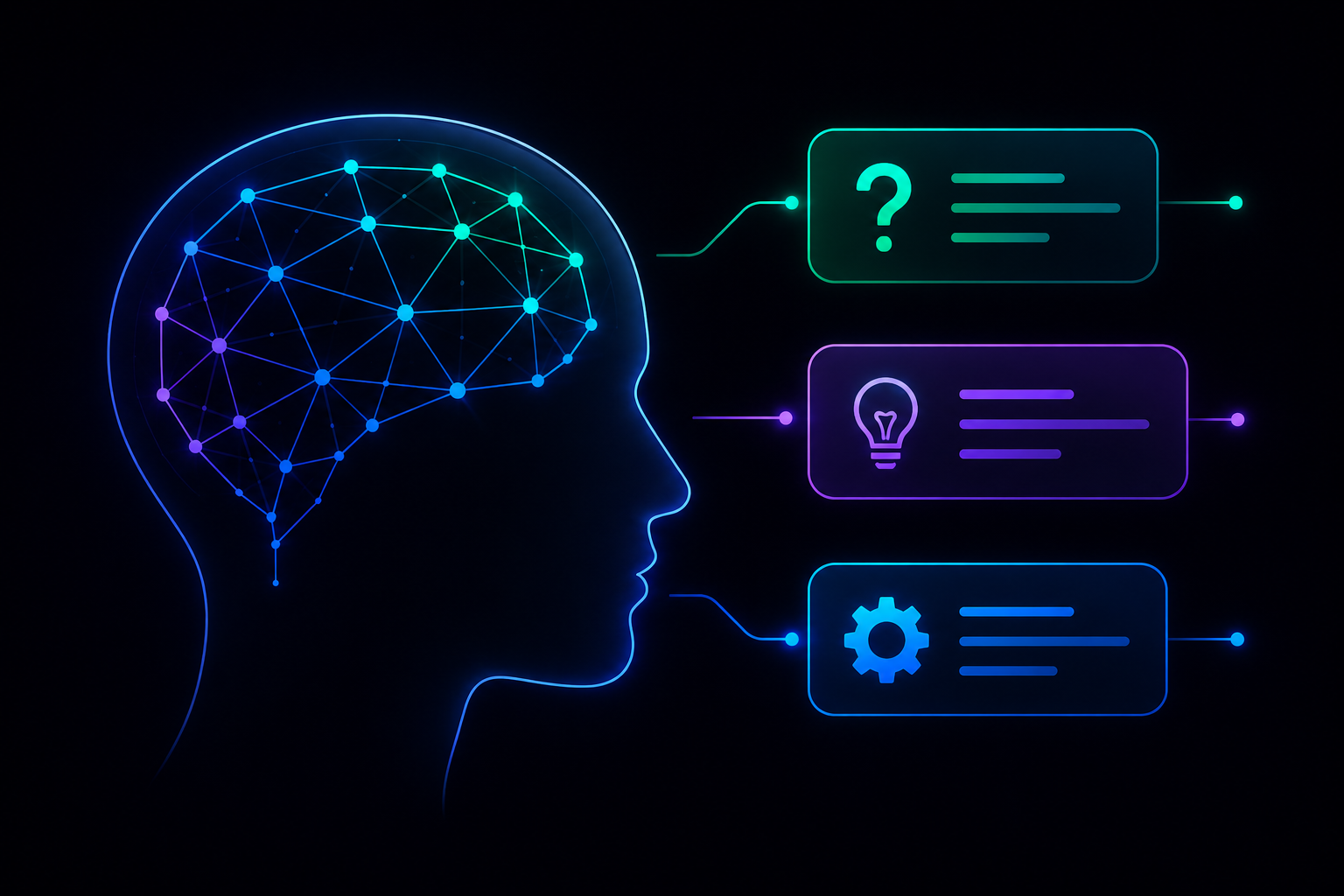
Behind the scenes, the process follows three steps. First, the AI interprets your request, identifying the action you want, the data involved, and any rules or constraints. Next, it maps that intent to programming concepts such as functions, loops, and data structures. Finally, it writes the code, often with an explanation of how it works.
Here is a typical request:
Write a Python function that takes a list of numbers, calculates the average, and returns it rounded to two decimal places. Return 0 if the list is empty.
From that one sentence, the AI knows the language, the input, the calculation, the formatting, and how to handle an edge case, so it can return a ready-to-run function. If the result is not quite right, you simply reply with a correction, such as "also ignore any negative numbers," and it updates the code while keeping the earlier context.
Natural Language Programming vs Traditional Programming
Natural language programming does not replace traditional coding so much as change where people spend their effort.
Traditional programming
Natural language programming
How you write it
Precise syntax in a programming language
Plain-language descriptions of what you want
Learning curve
Months or years to become productive
Minutes to start, though skill still helps
Speed
Slower for routine code
Very fast for drafts, scripts, and prototypes
Precision and control
Full control over every detail
Depends on how clearly you describe the task
Best for
Large, complex, or critical systems
Prototypes, automation, and everyday tasks
In practice, most developers now combine the two: they describe routine parts in natural language, then review and fine-tune the generated code by hand.
Tools for Natural Language Programming
Natural language programming shows up in several kinds of tools, each suited to a different level of experience.
Tool type
What it does
Examples
AI chat assistants
Answer coding questions and write code from a conversation
ChatGPT, Claude, Gemini
Coding assistants in editors
Suggest and write code inside your development environment
GitHub Copilot, Cursor
Agentic coding tools
Plan and carry out multi-step coding tasks across a whole project
Claude Code, OpenAI Codex
AI app builders
Turn a description into a working app or website with little or no code
No-code and low-code AI builders
For most beginners, an AI chat assistant such as ChatGPT or Claude is the easiest place to start, since you get explanations alongside the code. Our guide to the best AI chatbots for engineering compares the strongest options for technical work.
What You Can Build with Natural Language Programming
Natural language programming is especially good at small, well-defined pieces of software. People use it to write scripts that automate repetitive tasks, generate SQL queries from questions like "show me last month's top customers," clean and analyze spreadsheets, build simple web pages and prototypes, and connect apps through their APIs.
It is also a powerful way to learn. Beginners can describe what they want, see the resulting code, and ask the AI to explain each line, which makes programming concepts far easier to grasp than reading syntax rules in isolation.
The approach is powerful, but it has clear limits that every user should know.
Limitation
What you can do
Ambiguous requests lead to code that does the wrong thing
Describe inputs, outputs, and edge cases explicitly
Generated code can contain bugs or security flaws
Review, test, and scan code before using it
Large, complex systems are hard to describe in one prompt
Break the work into smaller, clearly defined parts
Private code or data may be shared with AI services
Check your company's policy and avoid sensitive data
The common thread is that AI-generated code is a starting point, not a finished product. Someone still needs to understand what the code does before it goes into anything important.
Tips for Writing Better Programming Prompts
The clearer your instructions, the better the code. Always name the programming language, describe the input and the expected output, mention edge cases and error handling, and say whether you care about performance, readability, or a particular coding style. Including a short sample of the data you are working with helps a lot.
Treat the conversation as an iterative process: start with a simple version, test it, then ask for improvements one step at a time. These are the same habits that improve any AI output, which our guides to prompt engineering and AI prompt optimization cover in more depth.
Explore Programming Concepts with Chat Smith
Chat Smith, a free AI chatbot for Android, iOS, and the web, is a handy place to explore the ideas behind programming in plain language. You can ask models such as GPT-6 Sol, Claude Sonnet 5, Gemini 3.5 Flash, and DeepSeek V4 Pro to explain programming concepts, describe what a short snippet of code does, or suggest how to phrase a request more clearly, then compare how different models answer the same question.
For building and maintaining real software, dedicated coding tools such as Claude Code, OpenAI Codex, or AI features inside code editors are a better fit, since they can work directly with your files and run your code. Free users of Chat Smith get limited use, and Chat Smith Pro raises those limits for $9.99 per month or $39.99 per year.
Natural language programming has made it possible for almost anyone to build useful software, and it saves experienced developers hours every week. But knowing the basics of how code works is still valuable: it helps you describe problems precisely, spot when generated code is wrong, and decide how the pieces of a larger project should fit together. The best results come from combining both skills, using plain language to move fast and programming knowledge to keep the results reliable.
Natural language programming is the idea of instructing a computer using everyday language instead of formal programming syntax, letting an AI model translate your description into working code or logic. It relies on large language models that have learned patterns from both natural language and code during training.
The Chat Smith Editorial Team brings together AI enthusiasts, researchers, and creators to make AI accessible and practical. We share trends, tool reviews, and actionable guides that help individuals and businesses stay informed, boost productivity, and get more from AI.